
Dutch central bank moves 86 tonnes of gold to London, cutting US and Canada shares to 18.5 % each
The Netherlands Bank (DNB) transferred 86 tonnes of gold from its vaults in New York and Ottawa to the Bank of England between March and August 2026, reducing its North‑American exposure and raising its London allocation to 32.1 % of total reserves.
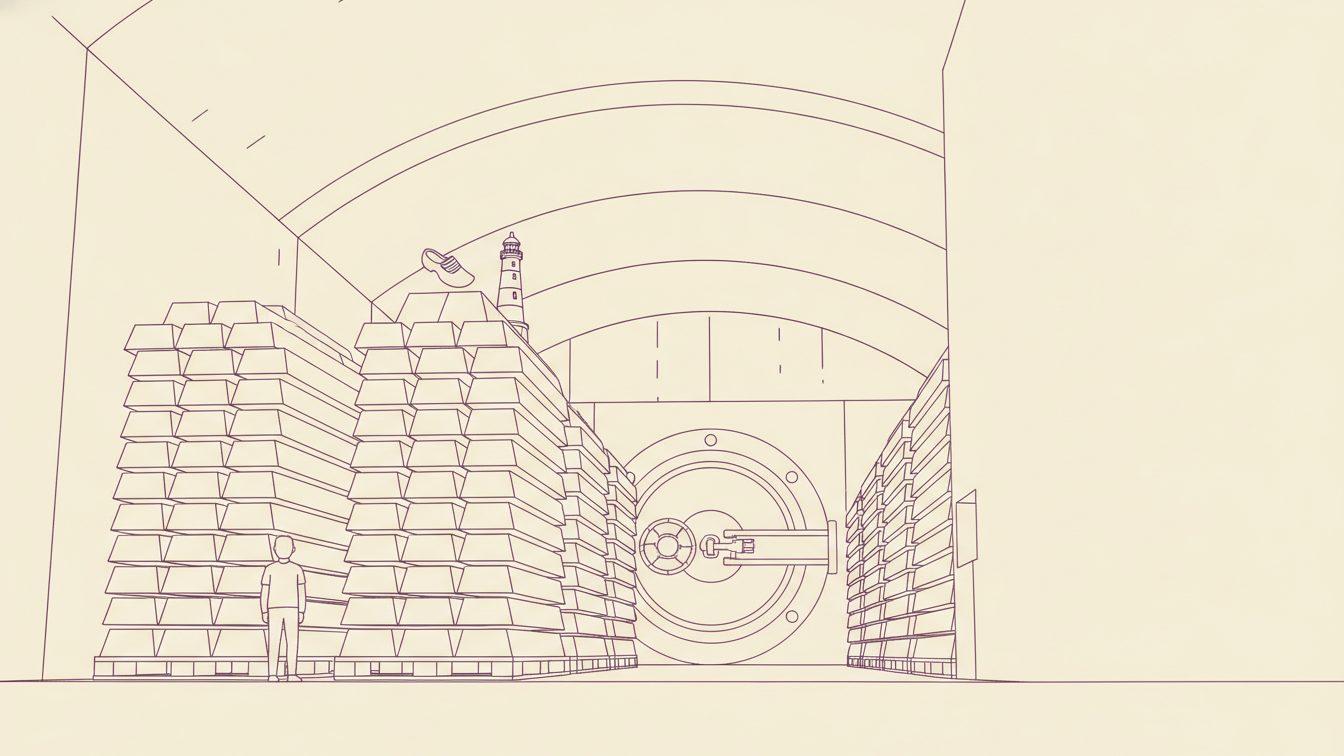
The Netherlands Bank (DNB) confirmed that it moved 86 tonnes of gold from its holdings in the United States and Canada to the Bank of England. The relocation took place over a six‑month window that began in March 2026 and concluded in August 2026, according to a BBC News report that quoted the DNB press release.
Background and scale of the move
DNB’s total gold stock stood at 612.4 tonnes at the end of 2025, a stock that the bank values at €72.2 billion. The gold is stored in several locations: New York, Ottawa, London and the bank’s own vault in Zeist, the Netherlands. Prior to the relocation, the United States accounted for 31.3 % of the total, Canada for 19.7 %, the United Kingdom for 18.1 % and the domestic Zeist vault for 30.8 % (BBC News). The 86‑tonne transfer represents roughly 14 % of the total stock, a material shift in geographic allocation.
Geographic allocation before and after the relocation
After the operation, the share of gold stored in New York fell to 18.5 % and the share in Ottawa also fell to 18.5 %. The London allocation rose sharply to 32.1 %, while the domestic Zeist share remained unchanged at 30.8 %. The table below summarises the before‑and‑after percentages.
| Location | Before (% of total) | After (% of total) |
|---|---|---|
| United States (New York) | 31.3 | 18.5 |
| Canada (Ottawa) | 19.7 | 18.5 |
| United Kingdom (London) | 18.1 | 32.1 |
| Netherlands (Zeist) | 30.8 | 30.8 |
| Source: BBC News article, 2 Sept 2026 | ||
Timeline and operational details
The relocation began in March 2026, when DNB initiated a “complex operation” to extract gold from its North‑American vaults. The process required several months of logistics, security coordination and customs handling, as described in the BBC excerpt. The operation was completed in August 2026, at which point DNB publicly announced the new allocation figures.
Bank president Olaf Sleijpen framed the move as “necessary to strengthen our resilience and preparedness”. The statement linked the relocation to “increasing geopolitical unrest”, suggesting that the bank wanted a storage location that could be accessed more readily in a crisis scenario. The Bank of England, as a major clearing house for gold, offers the ability to trade the metal quickly in emergency markets, a point highlighted in the DNB press release.
Strategic rationale and market implications
From a risk‑management perspective, shifting a larger share of reserves to London reduces dependence on two North‑American jurisdictions. The United States and Canada each host a single vault that, before the move, together held more than half of the DNB’s gold. By moving 86 tonnes to the United Kingdom, DNB diversifies its storage geography while concentrating a larger proportion of its reserves in a location that is part of the London gold market.
For market participants, the change may affect the liquidity profile of Dutch gold. Gold stored at the Bank of England can be pledged or sold in the London market with relatively low transaction costs, a factor that could be relevant if DNB needs to raise cash quickly during heightened geopolitical tension. The move does not alter the total quantity of gold held, nor does it affect the €72.2 billion valuation of the stock, which remains anchored to the end‑2025 balance sheet.
Analysts will watch whether the reallocation influences the pricing of Dutch sovereign bonds or the perception of the Netherlands’ overall financial resilience. The DNB’s own statement did not quantify any expected cost savings or risk reduction, so the precise impact on the bank’s balance sheet remains to be measured.
Open questions and next steps
Several aspects of the operation remain unconfirmed in the public record. DNB has not disclosed the exact logistics cost of moving 86 tonnes of gold across the Atlantic, nor has it provided a timeline for any future relocations. The bank also did not specify whether the domestic Zeist vault will continue to hold the same 30.8 % share or if further adjustments are planned.
Finally, the statement that the move was prompted by “increasing geopolitical unrest” is broad. While the commission notes heightened US‑Iran tensions, US‑Canada trade tariffs and broader uncertainty, DNB has not detailed which scenarios it is preparing for, nor how the London location specifically mitigates those risks.
In summary, the Dutch central bank’s 86‑tonne gold transfer between March and August 2026 reshaped the geographic distribution of its reserves, cutting U.S. and Canadian shares to 18.5 % each and raising the London share to 32.1 % of a total stock of 612.4 tonnes valued at €72.2 billion. The move reflects a strategic choice to enhance crisis‑time liquidity, but the full implications for Dutch financial stability will become clearer as the bank’s next reporting period unfolds.