
Hades Mining targets Germany’s first rare‑earth mine at Storkwitz, reviving a 2012‑abandoned deposit
Munich‑based start‑up Hades Mining announced plans to develop the Storkwitz rare‑earth deposit, which would be Germany’s inaugural rare‑earth mining operation after a test‑drilling programme was abandoned in 2012 for lack of profitability.
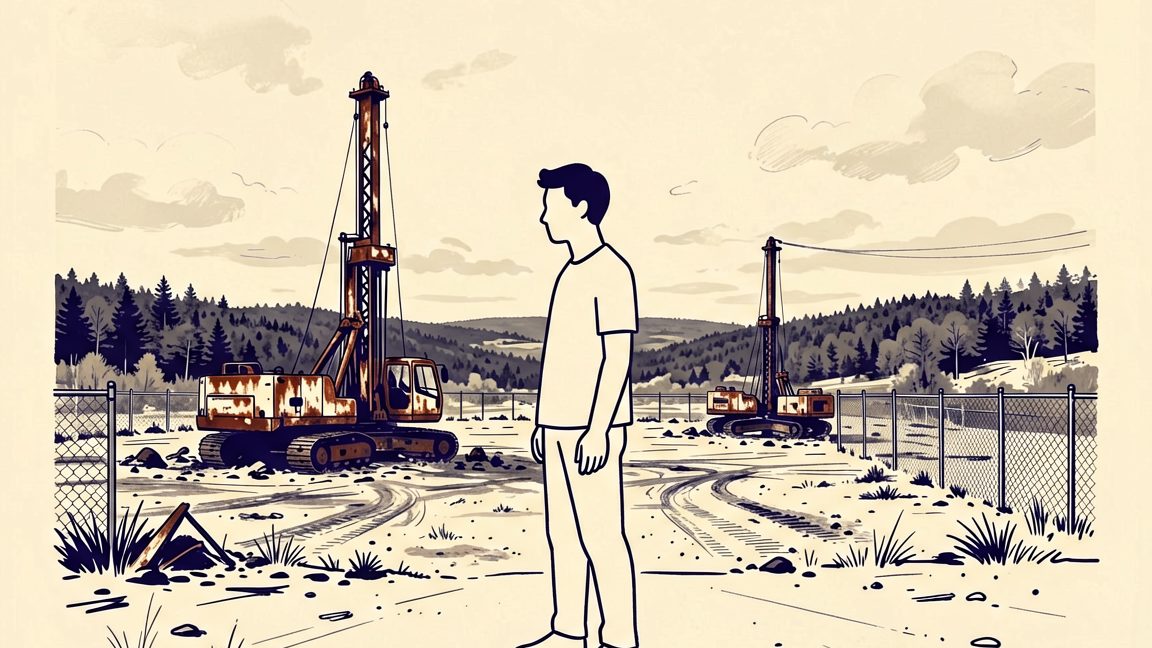
Munich‑based start‑up Hades Mining announced on 21 August 2026 that it intends to explore and eventually develop the Storkwitz rare‑earth deposit in northern Saxony. If the project proceeds, it would become Germany’s first operational rare‑earth mine, reviving a site that a German company abandoned in 2012 because it was not economically viable.
Background: Germany’s rare‑earth record
According to a Handelsblatt report, Germany has never operated a rare‑earth mine. The Storkwitz project therefore represents the first attempt to extract these critical minerals domestically. The article states, “Es wäre das erste Seltenerdprojekt in Deutschland” (it would be the first rare‑earth project in Germany).
2012 test drilling and abandonment
In 2012 a German firm carried out exploratory boreholes at Storkwitz. The same source notes that the company halted the project a few years later, citing insufficient profitability. The Handelsblatt excerpt reads, “Bereits 2012 hat ein deutsches Unternehmen dort Probebohrungen genommen, gab das Projekt aber wenige Jahre später wegen mangelnder Rentabilität wieder auf.” This historical context is central to the current claim that the deposit is being revisited under different market conditions.
Hades Mining’s 2026 announcement
The recent press release, reported by Handelsblatt, outlines Hades Mining’s intention to assess the deposit’s economic feasibility and, if positive, to launch extraction operations. The company describes the project as a “Münchener Start‑up” seeking to produce rare‑earth elements within Germany. No financial figures, headcount, or executive names were disclosed in the source material, and the research packet advises confirming those details before publication.
Strategic relevance for Europe
European policymakers are increasingly focused on securing domestic sources of rare‑earth elements, which are essential for high‑tech industries, defence applications and the green‑energy transition. The Storkwitz announcement arrives at a time when the European Union is debating measures to reduce dependence on Chinese imports. While the Handelsblatt article does not quantify the potential supply contribution of Storkwitz, the fact that it would be the first German mine underscores its symbolic importance.
Economic considerations
The 2012 abandonment was explicitly linked to a lack of profitability. The current claim rests on the assumption that market conditions have changed – higher rare‑earth prices, advances in extraction technology, or supportive policy incentives could alter the project’s economics. However, the source does not provide data on price trends, cost estimates, or projected output, so the economic case remains unverified.
What remains unknown
- Whether Hades Mining has secured financing or partners for the development phase.
- The projected timeline from exploration to commercial production.
- The expected annual output and its share of Germany’s total rare‑earth demand.
- Any regulatory approvals required from German mining authorities.
The research packet explicitly notes that the company’s chief executive, headcount and any financing details should be confirmed from a primary corporate source before publication. Until those details are known, the announcement should be reported as a plan rather than a confirmed investment.
Analysis: Potential impact and risks
Even without concrete numbers, the Storkwitz project illustrates two broader dynamics. First, the re‑emergence of a previously shelved deposit signals that market participants perceive a shift in the risk‑reward balance for rare‑earth mining in Europe. Second, the project’s success will depend on navigating a regulatory environment that has historically been cautious about new mining operations, especially for minerals linked to environmental concerns.
Should Hades Mining secure the necessary permits and financing, the project could provide a domestic source of rare‑earths for German manufacturers of electric‑vehicle motors, wind‑turbine generators and defence systems. Conversely, if the economic assumptions prove optimistic, the venture could repeat the 2012 outcome, leaving the deposit idle and reinforcing the EU’s reliance on imports.
Next steps
Industry observers will be watching for a detailed feasibility study from Hades Mining, any statements from the German Federal Ministry for Economic Affairs and Climate Action, and potential involvement of the European Commission’s raw‑materials strategy. The timeline in the packet shows only two events – the 2012 drilling and the 2026 announcement – so the next milestone will likely be a public disclosure of the project’s economic model.
In summary, Hades Mining’s plan to develop the Storkwitz deposit marks a potentially historic moment for German mining, but the claim that it will become the country’s first rare‑earth mine remains contingent on future economic and regulatory outcomes.