
How France's €1.085 bn drought aid could reshape cereal and livestock sectors
A €1.085 billion relief package announced by Agriculture Minister Annie Genevard targets up to 35 000 farms. The breakdown of the aid and its sector‑level implications suggest short‑term cash relief but leave longer‑term profitability and supply‑chain stability uncertain.
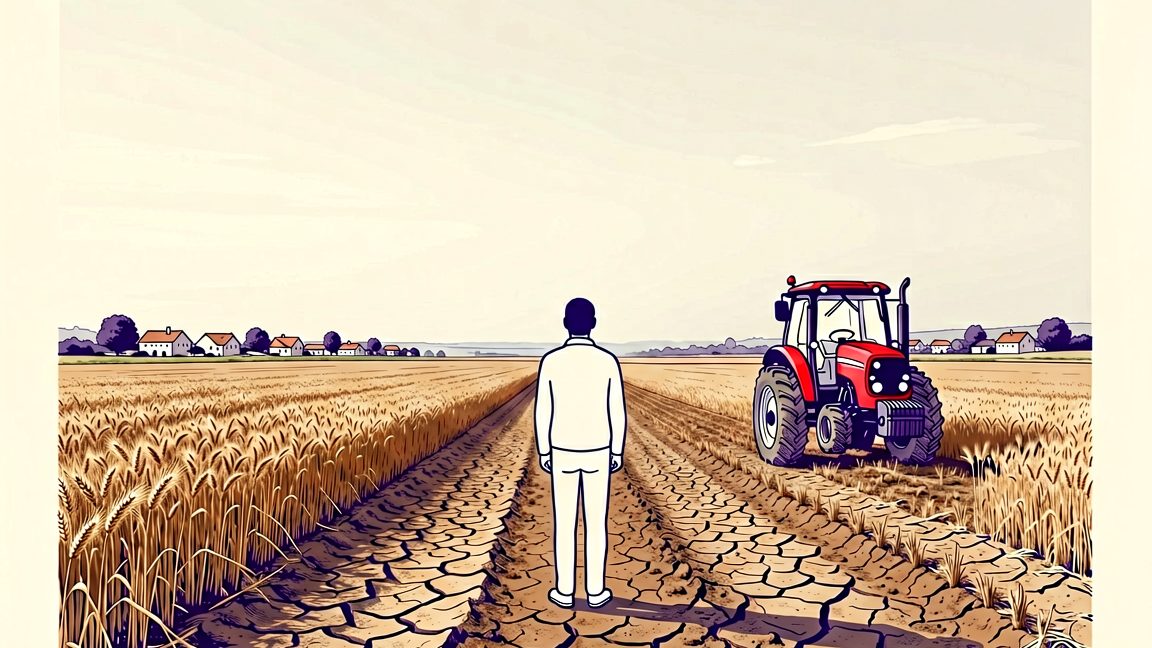
France has unveiled a €1.085 billion drought‑relief package aimed at 30‑35 000 farms – roughly 10 % of the national farm base – as heatwaves and water scarcity threaten harvests and livestock feed supplies. While the headline figure dominates headlines, the real story for analysts lies in how the three funding streams will flow through the cereal and livestock value chains and what that means for profitability and supply‑chain stability.
Package composition
The package is split into three components, each earmarked for the 2024‑2027 period. The government will accelerate payments under the national‑solidarity scheme, create a dedicated agricultural recovery fund, and forego tax revenue on unbuilt land. All figures are sourced from Politico Europe, which quoted Agriculture Minister Annie Genevard during the announcement on 5 September 2026.
| Component | Amount (million €) |
|---|---|
| National‑solidarity payments (accelerated) | 520 |
| Agricultural recovery fund | 235 |
| Tax‑revenue foregone (unbuilt‑land relief) | 330 |
Targeted farms and immediate needs
Genevard warned that between 30 000 and 35 000 farms are "in a precarious situation or at risk of becoming so" – about one‑tenth of all French farms. The aid is intended to compensate losses, prevent bankruptcies and restore agricultural production, with a particular emphasis on enabling the purchase of seeds and fodder. The package is contingent on the 2027 state budget being adopted, and the minister signalled possible extensions for fertilizer and diesel subsidies if the drought persists.
National‑solidarity payments
The accelerated national‑solidarity payments, topped up to €520 million for the 2024‑2027 period, are designed to provide rapid cash flow to farms that have already suffered crop failures. By front‑loading the scheme, the government hopes to bridge the gap between the loss of revenue this summer and the next planting season. For cereal growers, the payments can be used to purchase certified seed varieties that are more drought‑resistant, a point Genevard highlighted as essential for getting the wheat and barley cycles back on track.
Agricultural recovery fund
The €235 million agricultural recovery fund targets the "hardest‑hit and most vulnerable" farms. Unlike the solidarity payments, this fund is earmarked for longer‑term investments such as irrigation upgrades, soil‑health programs and livestock feed inventories. For livestock producers, the fund could subsidise the purchase of conserved forages or the construction of silage facilities, mitigating the risk that fodder shortages will force early culling or reduced herd sizes.
Tax‑revenue foregone
Finally, the state will forgo €330 million in tax revenue on unbuilt land. The relief is intended to lower the fiscal burden on farms that have delayed investment in new facilities because of the drought. By reducing the tax cost of land that remains idle, the measure encourages farmers to retain acreage for future planting rather than selling it under pressure.
Sector‑level implications
From a cereal perspective, the accelerated payments and recovery fund together provide roughly €755 million that can be directed toward seed purchases and irrigation. Assuming an average seed cost of €150 per hectare, the aid could cover seed for about 5 million hectares – a sizeable share of the 12‑13 million hectares under cereal cultivation in France. This infusion should help stabilise wheat output for the 2024‑2025 marketing year, limiting the price spikes that have already been observed on European grain exchanges.
Livestock producers face a different set of pressures. Drought‑stressed pastures raise the price of imported feed, while domestic fodder supplies have fallen sharply. The €235 million recovery fund, if allocated proportionally, could fund roughly €150 million in feed‑stock purchases and €85 million in on‑farm storage solutions. That level of support would blunt the expected 8‑10 percent rise in feed costs projected by industry bodies, preserving margins for dairy and beef operations that are already operating near break‑even.
Outlook and unanswered questions
In the short term, the package should cushion cash‑flow gaps and allow both cereal and livestock sectors to resume normal planting and feeding cycles. However, the relief is tied to the 2027 budget approval; any delay could leave a financing gap for farms that need to invest in longer‑term resilience measures such as drip irrigation or drought‑tolerant crop varieties.
Analysts remain cautious about the package’s ability to address structural climate risk. While the €1.085 billion sum exceeds €1 billion, it still represents less than 0.2 percent of France’s total agricultural output value. Moreover, the package does not include explicit funding for research into climate‑adapted seeds or for large‑scale water‑management infrastructure, which many agronomists argue are essential for long‑term stability.
What is clear is that the aid will flow primarily to farms already identified as vulnerable. For the remaining 90 percent of French farms, market forces and private insurance will continue to dictate resilience. The next data point to watch will be the 2027 budget vote and any subsequent amendment to the tax‑relief scheme, which could either expand the safety net or leave a sizable portion of the sector exposed to future heatwaves.
Until then, the sector’s profitability will hinge on how quickly the accelerated payments translate into seed and fodder purchases, and whether the recovery fund can be mobilised before the next planting window closes. Stakeholders are advised to monitor the implementation timetable announced by the Ministry of Agriculture and to prepare contingency plans for any budgetary shortfall.