
Gasoline plummets 11% as corn leads agricultural gains in volatile energy session
Sharp drops in refined products ease European transport costs, while rising corn prices pressure food manufacturers in a mixed commodities session.
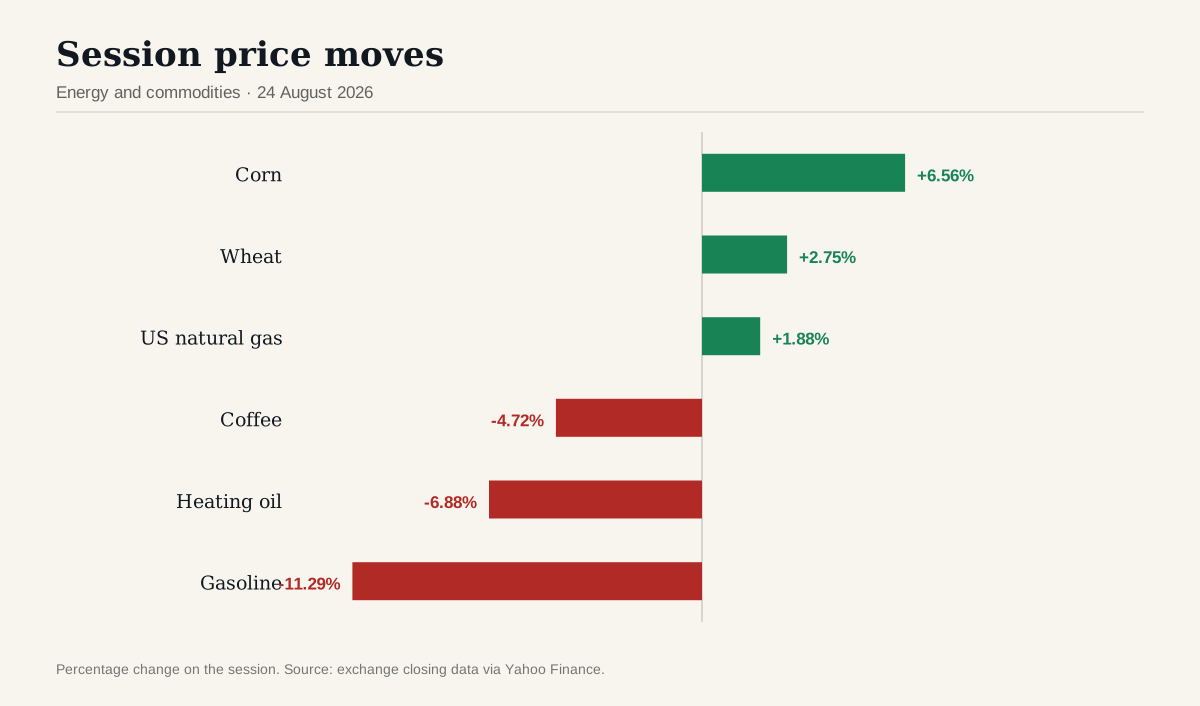
Gasoline prices tumbled 11.29% on 2026-08-24, leading a session of mixed moves in energy and agricultural commodities that directly impacted European corporate margins, from transport firms to food producers. The day's largest decline, in New York Mercantile Exchange (NYMEX) gasoline futures, came as part of a broader pullback in refined products, while corn futures surged 6.56% to lead agricultural gains. The shifts show the dual pressures of input cost volatility: relief in fuel expenses but growing strain from crop prices.
- Gasoline (RB=F) closed at USD 2.9699, down 11.29% on the day and 12.54% over a month.
- Corn (ZC=F) rose 6.56% to USX 515.5, up 10.86% over five days and 11.04% in a month.
- Euro (EURUSD=X) closed at USD 1.1665, down 0.20% on the day but up 2.53% over a month.
- Heating oil (HO=F) fell 6.88% to USD 4.1854, with a 5-day decline of 5.67%.
- US natural gas (NG=F) edged up 1.88% to USD 2.825, remaining 63.9% below its 52-week high.
Gasoline plummets 11%: Relief for European transport and retail
| Instrument | Close | Day | 5-day | Volume vs avg |
|---|---|---|---|---|
| Corn USX | 515.5 | +6.56% | +10.86% | 2.96x |
| Wheat USX | 700.25 | +2.75% | +3.78% | 0.99x |
| US natural gas USD | 2.83 | +1.88% | +5.02% | 0.99x |
| Coffee USX | 341.8 | -4.72% | -0.96% | 1.68x |
| Heating oil USD | 4.19 | -6.88% | -5.67% | 1.11x |
| Gasoline USD | 2.97 | -11.29% | -9.18% | 1.01x |
| Source: exchange closing data via Yahoo Finance, session of 2026-08-24. | ||||
The steep drop in gasoline futures, from USD 3.3479 to USD 2.9699, will provide immediate relief to European businesses reliant on road transport. For logistics firms like DHL, DB Schenker, and national trucking fleets, fuel costs are a major component of operational expenses, often accounting for 20-30% of total outlays. A single-day decline of 11% in gasoline prices could translate to lower short-term fuel surcharges, boosting margins or allowing for more competitive pricing. Airlines, too, stand to benefit indirectly: while jet fuel is a separate product, refined product markets are linked, and lower gasoline prices can ease pressure on overall refining margins, potentially stabilizing jet fuel costs.
Retailers with large delivery networks, such as Amazon Europe, Tesco, and Carrefour, may also see reduced distribution costs. These savings could help offset persistent inflation in other areas, though it is unclear whether businesses will pass them on to consumers or retain them to rebuild margins. The drop comes as gasoline futures trade 22.3% below their 52-week high, a level last seen in early 2026, suggesting the market may be pricing in weaker demand or increased refining capacity.
Heating oil, another key refined product, also fell 6.88% on the day, closing at USD 4.1854. For European households and businesses in colder climates, this decline could ease concerns about winter heating costs, though heating oil prices remain 13.4% below their 52-week high. Utilities that rely on heating oil for backup generation or district heating may see lower procurement costs, though the 1-month change remains nearly flat (+0.11%), indicating volatility rather than a sustained downward trend.
Corn leads agricultural gains, pressuring food manufacturers
Corn futures (CBOT) rose 6.56% to USX 515.5, extending a 10.86% gain over five days and an 11.04% rise in a month. The move, which leaves corn 1.7% below its 52-week high, will hit European food and agricultural businesses hard. Corn is a critical input for animal feed, ethanol production, and processed foods, from breakfast cereals to snack products. For animal feed producers like ForFarmers (Netherlands) and De Heus (Belgium), higher corn prices will increase production costs, which are likely to be passed on to livestock farmers. This, in turn, could push up meat and dairy prices for consumers, adding to food inflation pressures.
Ethanol producers, such as Raízen (a joint venture between Shell and Cosan) and European biofuel firms, will also face higher feedstock costs. With the EU's Renewable Energy Directive requiring a 32% share of renewables in energy by 2030, ethanol demand is set to rise, but higher corn prices could squeeze margins unless producers can pass costs on to fuel suppliers. Processed food companies like Nestlé, Unilever, and Danone, which use corn derivatives in products ranging from corn syrup to corn starch, may also see increased input costs. These firms have already struggled with inflation in recent years, and the latest corn rally could force difficult choices between raising prices or accepting lower margins.
Wheat futures (CBOT) rose 2.75% to USX 700.25, adding to a 3.78% 5-day gain. While less dramatic than corn, the move will compound pressures on European flour millers, bakeries, and pasta producers. Wheat is a staple in European diets, and higher prices could lead to increased costs for products like bread, pasta, and pastries. With wheat trading 2.1% below its 52-week high, the market remains tight, and further gains could test the ability of food manufacturers to maintain profitability.
Natural gas edges up, but long-term contracts offer stability
US natural gas futures (NYMEX) rose 1.88% to USD 2.825, though the contract remains 63.9% below its 52-week high. The small gain came amid a flurry of news, including ReconAfrica's advance to a 1,000m horizontal test at its Kavango West 1X well and Equinor and Uniper's 15-year gas supply deal for Germany. For European utilities and industrial users, the Equinor-Uniper deal is more significant than the day's price move: long-term contracts provide price stability, reducing exposure to short-term market volatility.
Utilities like E.ON, RWE, and Enel, which rely on natural gas for power generation and district heating, have increasingly turned to long-term contracts to hedge against price swings. The 15-year deal between Equinor (Norway) and Uniper (Germany) ensures a steady supply of gas at a fixed or indexed price, which is critical for planning and budgeting. Industrial users, such as BASF (chemicals) and Yara (fertilizers), also benefit from stable gas prices, as natural gas is a key feedstock for their production processes. While the day's 1.88% rise in US natural gas prices is modest, the broader context of low prices, due to ample supply and mild weather, provides a favorable backdrop for European businesses reliant on gas.
Energy majors and utilities: Mixed signals amid commodity swings
Of the 20 energy and commodities companies that traded on the session, 15 fell and 5 rose, reflecting mixed sentiment. The decline in energy stocks came even as natural gas prices edged up, highlighting that equity performance does not always track underlying commodities. For European majors like Shell, TotalEnergies, and Equinor, the day's moves show the complexity of their business models: higher natural gas prices can boost upstream profits, while lower refined product prices can weigh on downstream margins.
Shell, for example, has significant refining operations in Europe, and the 11% drop in gasoline prices could reduce its refining margins in the short term. TotalEnergies, which has a large presence in both upstream and downstream sectors, may face similar headwinds. Meanwhile, Equinor's deal with Uniper could provide a long-term revenue stream, potentially offsetting any short-term pressure from lower oil or gas prices. Utilities, too, face mixed signals: lower heating oil prices may reduce demand for gas-fired heating, but stable gas prices from long-term contracts could support profitability.
What it means for European margins: Currency and cost dynamics
The euro's movement against the dollar adds another layer to the commercial impact. While the euro fell 0.20% on the day to USD 1.1665, it has risen 2.53% over a month. Since most energy and agricultural commodities are priced in dollars, a stronger euro reduces the cost for European buyers in euro terms. For example, a 10% rise in dollar-denominated corn prices would be partially offset by a 2.5% rise in the euro, lowering the effective cost increase for European importers.
This currency dynamic is critical for margin management. For a German food manufacturer importing corn, the 11.04% rise in corn prices over a month is reduced by the euro's 2.53% gain, resulting in a net increase of around 8.5% in euro terms. Similarly, the 12.54% drop in gasoline prices over a month is amplified by the stronger euro, providing even greater relief for European transport firms. These currency-adjusted costs will be a key factor in third-quarter earnings reports, as businesses assess whether they can maintain or improve margins.
The session of 2026-08-24 closed with gasoline at its lowest level in weeks and corn near its 52-week high, a juxtaposition that captures the dual pressures facing European businesses. For transport and retail firms, the day brought relief; for food manufacturers, it added strain. With no clear direction in broader commodity markets, the coming weeks will test whether these moves are temporary or signal a longer-term shift, one that will shape corporate strategies and consumer prices across Europe.