
The treatment of Joanna Cherry shows Scotland’s culture of liberal intolerance
The barring of the SNP politician from the Edinburgh Fringe is yet another blow to free speech and open debate.

Like all the finest comedians, Jerry Sadowitz has impeccable timing. As the debate around free speech and no-platforming rages, the uncompromising, boundary-ignoring comic has announced that he will play this year’s Edinburgh Fringe. Sadowitz, you may remember, had last year’s show at the Pleasance Theatre cancelled after complaints about its confrontational, penis-displaying content. Undeterred, he plans to bring the same performance to a three-night run at the Queen’s Hall this autumn. If he at times presents a challenge to free-speech advocates, he is an important and valuable one – tell him what he isn’t allowed to do and he’ll do precisely that. Sadowitz forces us to think about where and how the line should be drawn. It’s Joanna Cherry, the high-profile feminist, ...
Why the Tories should back proportional representation
Received wisdom says voting reform could kill off the Conservatives. That’s not how it’s worked in Europe.

There’s a conventional view that proportional representation would be a way to lock the Tories out of government forever. Since the Second World War, the right have been the great beneficiaries of the distortions of the UK's first past the post (FPTP) electoral system – never getting above 50 per cent of the vote, but gaining a majority in ten of 21 elections, while Labour won a majority in only eight. With proportional representation (PR), it is argued, a perpetual progressive coalition could always outnumber the right. Yet the power of PR to eliminate the right is not guaranteed. In the short term, PR could be more beneficial for the Tories than FPTP. The simple elegance of our current system is ...
Is Keir Starmer the heir to Boris Johnson?
The Tories’ 2019 victory was due to the popularity of their policies, not their leader. Labour could use the same strategy.

One myth of the Conservatives’ victory in 2019 was that Boris Johnson was wot won it. This myth made Tory MPs keep him in power even when it became clear he was unfit for the job. They didn’t want to lose a proven election winner. But Johnson wasn’t particularly popular in 2019. The Conservatives won because they promised to get Brexit done, Jeremy Corbyn was deeply unattractive and the party offered a message on public services, crime and the NHS that resonated with voters. Johnson became synonymous with Brexit but he himself was less popular on election day than either Theresa May and Corbyn had been in 2017. [See also: Keir Starmer's manifesto: Labour's Five Missions] Another leader who isn’t that popular but who is ...
Richard Sharp’s Eurovision appearance
Rather than keep a low profile, the outgoing BBC chairman is expected to head to Liverpool for the Eurovision semi-final.

You might expect Richard Sharp, the soon-to-be-former chairman of the BBC, to be keeping a low profile. Not a bit of it. On Wednesday Sharp was spotted at a journalism conference in London, held to honour the legacy of the late great Sir Harry Evans. (Other attendees included Emily Maitlis, Andrew Marr, the New Statesman's political editor, Katharine Viner, editor of the Guardian, the BBC’s Amol Rajan, and Rachel Johnson.) Next, the Chatterer hears Sharp will be heading up to Liverpool on Thursday night for the semi-final of the Eurovision Song Contest. Not all at the BBC will be pleased to see their outgoing chairman demonstrating his support for Eurovision. There had apparently been a bun fight for places (this is, after ...
National Conservatism is an intellectual dead end
The NatCon movement offers nothing but the redundant fusion of economic liberalism and social authoritarianism.

Meet the National Conservatives – a new political movement whose aim is to reassert the nation state and national independence in the face of liberal globalism. The NatCons, who are holding their UK conference in London this month, seek to achieve a post-liberal break with what they call fusionism: the Reaganite and Thatcherite blend of social conservatism with economic liberalism. While helping to defeat the Soviet Communist bloc, this fusion has failed to stop 40 years of centre-right collusion with progressive politics. As the NatCons' Israeli-American founder, Yoram Hazony, writes in his book Conservatism: A Rediscovery, “To the extent that Anglo-American conservatism has become confused with liberalism, it has, for just this reason, become incapable of conserving anything at all. Indeed, in our day, conservatives have largely become bystanders, ...
Why should the Met Police get the benefit of the doubt?
Police claims that we have a right to protest no longer matter once they have started nicking people for the mere intention to protest.

The Metropolitan Police made 64 arrests along the route of the coronation procession on Saturday. Of these, 52 “related to concerns people were going to disrupt the event”. Two days on, just four people had been charged, and although the force maintains that other investigations “require more time to progress”, it is unclear what complicated and late-breaking forensic evidence could possibly come to light regarding someone’s intention to slightly disrupt a parade. As a result, the statement the Met’s press office released last night explaining all this reads suspiciously like an awkward confession that its officers had, in fact, nicked a bunch of innocent people for no good reason whatsoever. “It was not our intention to prevent protest,” the statement claims ...
Why Labour is winning back Leave voters
The local elections vindicated the party’s strategy of minimising Brexit and focusing on the cost of living.

One interesting nugget from last week’s local elections was Labour’s progress with Leave voters. Analysis from Sky found that Labour’s vote share increased by around 6 percentage points in areas where a majority voted for Brexit. Compare that to the 2019 general election – the low point of Labour electoral strategy – when 40 per cent of Labour voters who supported Leave defected to the Conservatives. There are two possible interpretations. Either the importance of Brexit as an issue has diminished, or Labour is managing to appeal to Leavers to whom it is still important. It’s a bit of both. Most importantly, Brexit has slipped down the list of voters’ priorities. Fewer than one in five think Brexit is the most important ...
The Tories are facing a nightmare electoral scenario
The Conservatives are trapped in a deadly pincer movement as both Leavers and Remainers turn on them.
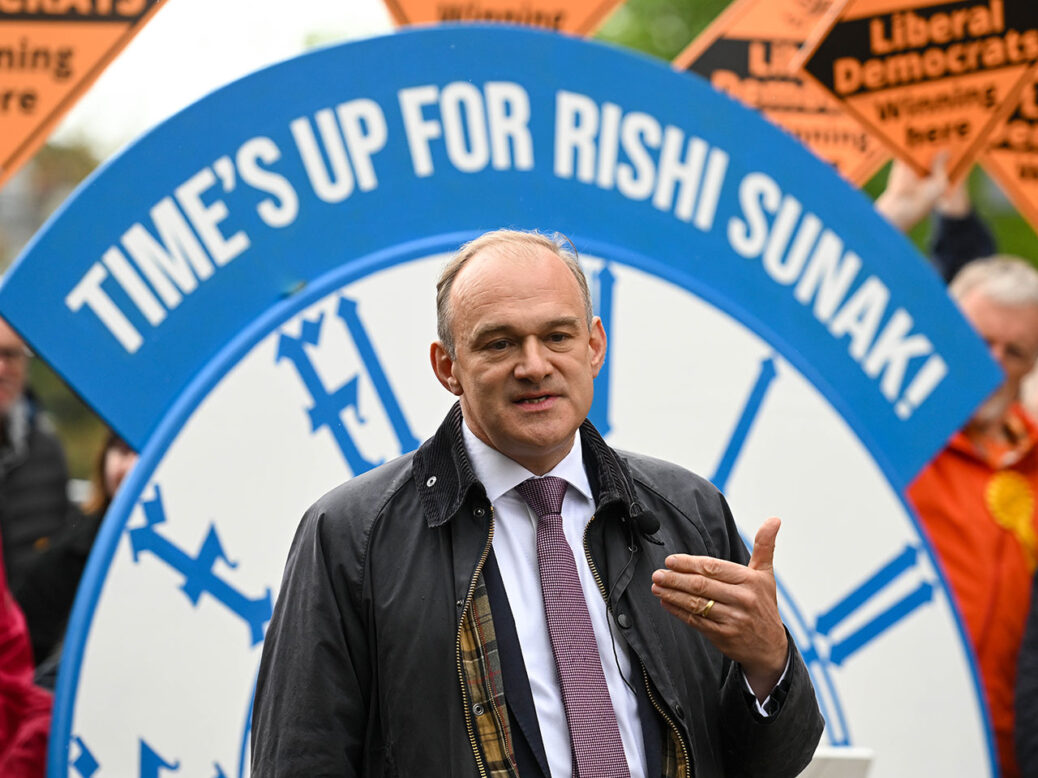
The local elections of May 2019 were pretty disastrous for Theresa May’s government, as I remember all too well. It was no consolation that they subsequently turned out to be less disastrous than the European parliamentary elections three weeks later. In the local elections, Leave-voting Conservatives were grumpy and often stayed at home or voted for Ukip; Remain-voting Conservatives defected to the Liberal Democrats. The response of the Conservative Party was to turn itself into an unequivocally Leave party, which proved to be in its own short-term electoral interests if not, I would argue, in the country’s long-term interests. It is worth returning to 2019 because it provides the context for the 2023 local election results. Four years ago the results were bad ...