
Champagne output to halve in 2026 as French wine harvest slides to 70‑year low, damage estimated at €10‑15 bn
French officials say 2026 Champagne production will be about 50 % of 2025 levels, pushing total national wine output below 3.4 billion litres – the smallest harvest since 1957 – and inflicting €10‑15 billion in economic loss, roughly 0.5 % of GDP.
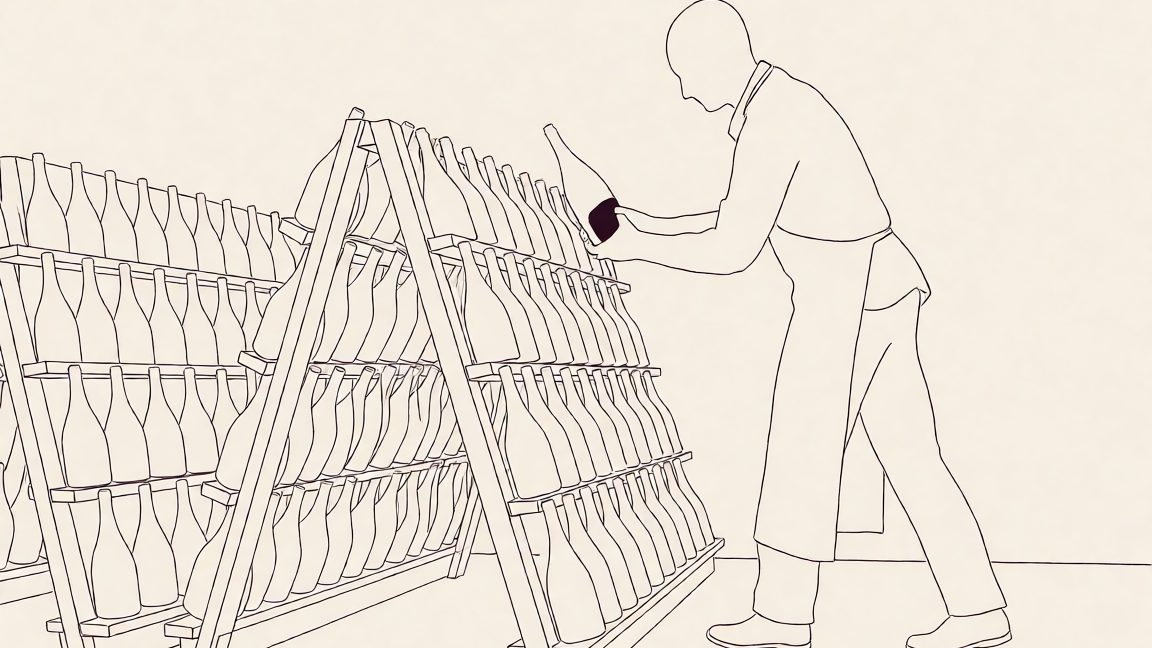
France’s 2026 wine harvest is set to shrink dramatically after an unprecedented summer of drought and heatwaves, according to figures released by the Agriculture Ministry’s statistics service, Agreste, and reported by Politico EU. Champagne output is projected to be roughly half of the 2025 level, and total national wine production is expected to dip below 3.4 billion litres – the lowest volume since 1957.
Champagne production cut by 50 %
In the Champagne region, growers harvested their grapes earlier than ever before to avoid excessive sugar levels. Politico EU notes that “output there is expected to be roughly halved, with grape bunch weights at their lowest in 20 years.” The 2026 forecast puts Champagne output at 50 % of the 2025 figure.
National wine output falls to a 70‑year low
The broader French wine sector is also hit hard. The same Politico EU article states that “France’s wine production is expected to fall below 3.4 billion liters this year as drought and repeated heat waves battered vineyards across the country.” If the forecast holds, the 2026 crop would be the smallest since 1957, marking a near‑70‑year low.
Economic damage quantified
French Environment Minister Monique Barbut has estimated the summer’s economic damage at €10 billion to €15 billion, which she said represents “about 0.5 percent of GDP.” This range translates to a loss of roughly half a percent of France’s gross domestic product for 2026.
Implications and unknowns
The figures raise several questions for the French wine industry and the broader economy. While the Ministry’s release provides the first official harvest estimates, it does not detail how the shortfall will affect export volumes, price dynamics, or employment in wine‑producing regions. The government has announced emergency farm aid, but the size and allocation of that package are not disclosed in the present data.
Analysts will watch how vintners adjust planting decisions for the next vintage, and whether the reduced supply will translate into higher wine prices domestically and abroad. The impact on related sectors – such as tourism in Champagne and logistics for wine distribution – remains to be quantified.
| Indicator | 2026 figure | Unit | Comparison |
|---|---|---|---|
| Champagne output relative to 2025 | 50 | % | Half of 2025 level |
| Total French wine production | 3.4 | billion litres | Below 3.4 bn L, lowest since 1957 |
| Economic damage (summer 2026) | 10‑15 | billion euros | ≈0.5 % of French GDP |
| GDP impact | 0.5 | % | Share of national GDP |
The timeline is straightforward: on 8 September 2026 the Agriculture Ministry published the harvest estimates, and Politico EU released the accompanying analysis the same day. No contradictory evidence has emerged in other outlets.
What remains unknown is the final verification of the harvest figures once the full season’s data are compiled, and the precise scale of the government’s emergency aid package. Until those details are confirmed, the current estimates provide the most concrete picture of the 2026 wine‑sector shock.