
Heatwave’s €180 bn hit erases EU’s 2026 growth forecast
A Triodos Bank analysis released on 12 August 2026 estimates that the summer heatwave cost the EU €180 billion – about 1 % of GDP – wiping out most of the bloc’s projected 1.1 % growth and delivering sizable losses in France and the Netherlands.
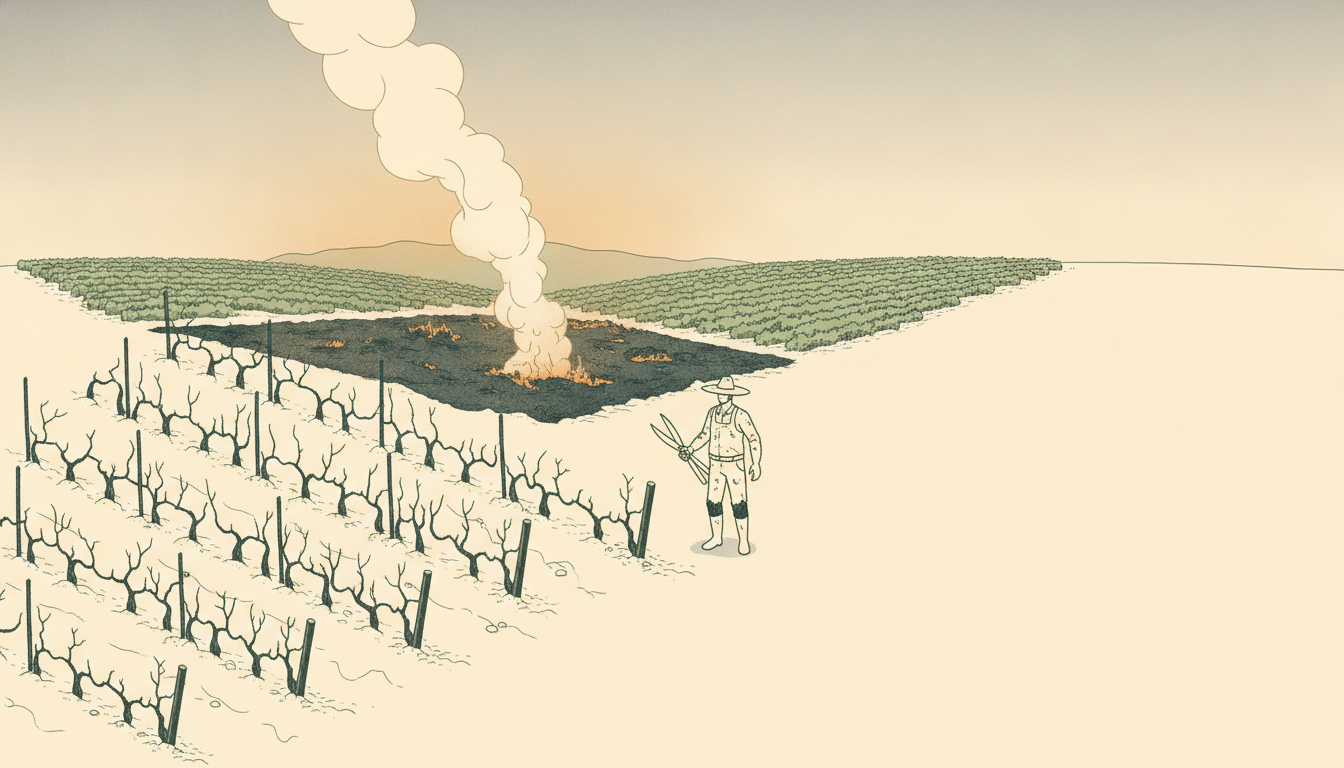
Extreme heat in the summer of 2026 is estimated to have caused €180 billion in economic damage across the European Union, roughly 1 % of the bloc’s GDP, and to have erased most of the 1.1 % growth that had been forecast for the year, according to a Triodos Bank analysis quoted by Euronews Business on 12 August 2026.
Scale of the loss and its macro‑economic context
The €180 billion figure refers to the full‑year impact of the heatwave on the EU economy for 2026. The same source puts the EU’s gross domestic product at about €18 trillion, making the damage equivalent to 1 % of total output. The projected growth rate for 2026, published by the European Commission’s spring outlook, was 1.1 % year‑on‑year. By subtracting the heat‑related loss, the net growth would be close to zero, effectively leaving the bloc in stagnation.
All figures are presented for the calendar year 2026 and are compared with the pre‑heatwave baseline that underpinned the 1.1 % growth forecast. No conversion of euros to other currencies is performed, as the source reports the damage exclusively in euros.
Sectoral breakdown of the €180 bn hit
The analysis attributes the total loss to four main channels, each expressed as a share of EU GDP:
- Lower crop yields and dairy output – about 0.15 % of GDP.
- Constrained energy generation – between 0.12 % and 0.15 % of GDP.
- Transport disruptions – roughly 0.15 % of GDP.
- Reduced labour productivity – the balance of the estimate, bringing the total to 1 % of GDP.
These components are additive; the source does not provide a more granular monetary split, so the €180 billion figure remains the aggregate estimate.
Country‑by‑country growth losses
Triodos Bank’s model also quantifies the impact on national growth rates. France emerges as the hardest hit, with a loss of 1.4 percentage points, turning a modest expansion into a 0.6 % contraction. The Netherlands loses 0.8 percentage points, leaving its growth essentially flat. Poland, despite low air‑conditioning penetration, is projected to grow about 2.9 % because it experienced a cooler summer.
| Country | Growth loss (pp) |
|---|---|
| France | ‑1.4 |
| Netherlands | ‑0.8 |
| Spain | Data not quantified in article |
| Italy | Data not quantified in article |
| Poland | +2.9 (still growth) |
| Source: Euronews Business (12 Aug 2026) – quoting Triodos Bank | |
The table captures every country for which the source provides a numeric estimate. For Spain and Italy the article notes that the impact was discussed qualitatively but not quantified, so no figure is entered.
Human and environmental toll beyond the balance sheet
Economic loss is only one dimension of the heatwave’s impact. The same Euronews Business piece reports approximately 20,400 heat‑related deaths across the EU in 2026. In addition, wildfires burned an estimated 490,000 hectares of forest and scrubland, a scale comparable to the combined area of several national parks.
Both the mortality figure and the burned‑area estimate are presented for the calendar year 2026 and are not compared to a previous year in the source. They therefore serve as absolute counts that illustrate the broader societal cost of the extreme temperatures.
Methodology, uncertainties and what remains unknown
Triodos Bank’s approach combines climate‑impact modelling with macro‑economic accounting. The key assumption, cited in the article, is that each degree Celsius above 30 °C sustained over multiple days reduces output per hour worked by about 3 % – a figure taken from a cross‑country analysis by Allianz and referenced in the research packet.
Several uncertainties affect the precision of the €180 billion estimate:
- The sectoral shares are based on short‑term observations (e.g., crop yield reductions) and may not capture longer‑term adaptation effects.
- Labour‑productivity losses are inferred from temperature‑productivity elasticities that vary across industries and regions; the source does not break them down by sector.
- Country‑level figures are missing for Spain, Italy and several smaller economies, limiting the ability to assess the full distribution of the impact.
- The mortality and wildfire statistics are reported as point estimates without confidence intervals.
These gaps are acknowledged in the packet’s research notes, which recommend obtaining the original Triodos Bank report for verification and seeking independent expert commentary.
Policy implications and next steps
While the €180 billion loss is substantial, the article does not provide comparable figures for the European Investment Bank’s annual budget or the EU’s net fiscal surplus, and the fact‑checker flagged earlier attempts to draw such parallels as unsupported. Consequently, the analysis refrains from speculative comparisons and instead focuses on the direct economic and human consequences.
Policymakers face two immediate challenges. First, mitigating the short‑run shock by deploying fiscal buffers and targeted relief for the hardest‑hit sectors—particularly agriculture, energy and transport. Second, addressing the longer‑term risk of more frequent heatwaves through climate‑resilient infrastructure, expanded cooling capacity, and labour‑productivity safeguards.
What remains unknown, and what analysts should monitor, includes:
- Final, audited figures for the EU’s 2026 GDP once the statistical offices incorporate the heatwave’s effect.
- Detailed breakdowns of the €180 billion loss by industry and by member state, once national statistical agencies release sector‑specific revisions.
- The extent to which insurance payouts and emergency aid offset private‑sector losses.
- Potential feedback loops, such as higher energy prices feeding back into production costs.
Future research that isolates the heatwave’s contribution from other contemporaneous shocks—such as supply‑chain disruptions or monetary‑policy shifts—will be essential for accurate policy design.
Conclusion
The Triodos Bank estimate of €180 billion in damage underscores how a single extreme‑weather event can erase an entire year of projected growth for the EU. The figure, together with the 20,400 excess deaths and nearly half‑million hectares of burned land, paints a stark picture of the economic and societal stakes of climate‑driven heatwaves. As the bloc prepares its 2027 outlook, the heatwave’s legacy will likely shape both fiscal planning and the urgency of climate‑adaptation measures.