
Wheat jumps 9% to 52-week high as El Niño lifts grains; coffee tumbles 14%
Sharp gains in wheat and corn prices raise input costs for European food producers, while a steep drop in coffee eases pressure on roasters.
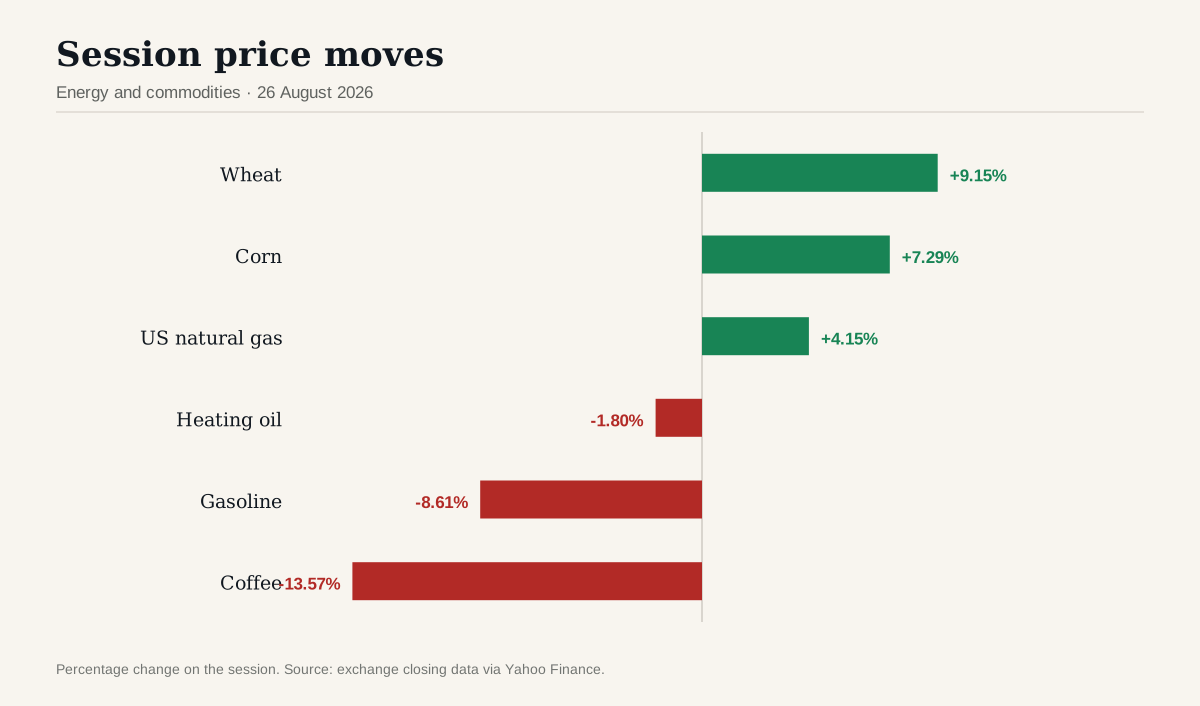
Wheat futures surged 9.15% on 2026-08-26, closing at USX 748.25, as concerns over El Niño-driven weather patterns lifted grain prices, adding to cost pressures for European food producers. The rally, which pushed wheat to its 52-week high, led a broader rise in agricultural commodities, with corn also climbing 7.29% on the day. Meanwhile, coffee futures tumbled 13.57%, and gasoline prices slid 8.61%, creating mixed cost signals for European businesses.
- Wheat futures: +9.15% to USX 748.25 (52-week high)
- Corn futures: +7.29% to USX 537 (0.3% below 52-week high)
- Coffee futures: -13.57% to USX 321 (26.7% below 52-week high)
- Gasoline futures: -8.61% to USD 2.9728
- Euro vs USD: -0.10% to 1.1656 (3.1% below 52-week high)
Wheat and corn lead agricultural rally on El Niño fears
| Instrument | Close | Day | 5-day | Volume vs avg |
|---|---|---|---|---|
| Wheat USX | 748.25 | +9.15% | +10.00% | 1.68x |
| Corn USX | 537 | +7.29% | +13.53% | 2.64x |
| US natural gas USD | 2.89 | +4.15% | +2.52% | 0.94x |
| Heating oil USD | 4.17 | -1.80% | -6.39% | 1x |
| Gasoline USD | 2.97 | -8.61% | -8.67% | 1.06x |
| Coffee USX | 321 | -13.57% | -10.71% | 1.48x |
| Source: exchange closing data via Yahoo Finance, session of 2026-08-26. | ||||
Wheat's 9.15% jump was the session's largest move, with the contract closing at its 52-week high of USX 748.25, having traded in a range of 492.25 to 748.25 over the past year. The rally followed reports that Citi had raised its price targets for corn, soybeans, and wheat, citing intensifying El Niño risks. Corn futures also rose sharply, closing at USX 537, just 0.3% below their 52-week high of 538.75, after gaining 7.29% on the day. Volume in both contracts was elevated, with wheat trading at 1.68 times its 20-day average and corn at 2.64 times, indicating strong investor interest.
For European businesses, the gains in wheat and corn are likely to add to input cost pressures. Wheat is a key ingredient in flour, bread, pasta, and animal feed, while corn is used in livestock feed, ethanol, and processed foods. Higher futures prices typically translate to higher spot prices for physical grain, squeezing margins for flour mills, bakeries, and meat producers. These costs may eventually be passed to consumers, adding to food inflation in the eurozone, where the European Central Bank has been working to bring price growth back to its 2% target.
Coffee tumbles 13.5% as Brazilian supply eases
Coffee futures were the session's biggest faller, dropping 13.57% to USX 321, their lowest level in a month. The decline came after reports that Brazil's coffee warehouses were filling, easing concerns over tight global supply. Brazil is the world's largest coffee exporter, and a build-up in stockpiles suggests that production may be recovering from earlier weather-related disruptions. Volume in coffee futures was 1.48 times the 20-day average, indicating strong selling pressure.
The drop in coffee prices will provide relief to European coffee roasters and retailers, who have faced rising costs over the past year. Companies such as Nestlé, which sources a significant portion of its coffee from Brazil, and local roasters could see margins improve as input costs fall. Retailers may also benefit, either by maintaining prices to boost profits or by lowering prices to attract consumers amid high food inflation.
Energy markets mixed: natural gas up, gasoline slides
Energy markets were mixed, with US natural gas futures rising 4.15% to USD 2.885, while gasoline and heating oil fell. Natural gas's gain came amid reports that trading firm Gunvor was considering acquiring Silver Hill's gas assets for up to $1.5 billion, though the contract remained 63.1% below its 52-week high of USD 7.827. Volume in natural gas was 0.94 times the 20-day average, indicating muted investor interest.
Gasoline futures slid 8.61% to USD 2.9728, extending a five-day decline of 8.67%. The drop followed reports of easing US-Iran hostilities, which reduced fears of supply disruptions. Heating oil also fell, closing 1.80% lower at USD 4.1676. For European businesses, lower gasoline prices could reduce transport and logistics costs, as diesel and gasoline are key inputs for trucking, shipping, and delivery companies. However, the euro's slight decline against the dollar, down 0.10% to 1.1656, partially offset this benefit, as European buyers pay for dollar-denominated energy in euros.
What the moves mean for European businesses
The day's commodity price swings create mixed signals for European corporate margins. For food manufacturers, the rise in wheat and corn prices is a headwind: a 9% increase in wheat, if sustained, could add millions of euros to annual input costs for large bakeries and feed producers. Conversely, the drop in coffee prices is a tailwind for roasters and retailers, who have struggled with high costs. In energy, lower gasoline prices offer relief to transport and logistics firms, which have seen their margins squeezed by rising fuel costs in recent quarters.
The euro's movement is a critical factor for European businesses. While the currency has gained 2.52% against the dollar over the past month, its 0.10% decline on 2026-08-26 means that European buyers of dollar-denominated commodities, including oil, gas, and grains, face slightly higher costs. This could amplify the impact of rising wheat and corn prices, even as it partially offsets the benefit of lower gasoline prices.
European energy majors and utilities: no major moves reported
Among the 20 energy and commodities companies that traded on the day, 7 rose and 13 fell, though no major European energy majors or utilities were listed as leading movers. The data did not report significant price changes for firms such as Shell, TotalEnergies, or E.ON, indicating that the day's commodity moves had not yet translated into large shifts in equity valuations. This suggests investors may be waiting for further clarity on supply and demand dynamics before adjusting their positions.
Market participants will next watch the release of weekly US grain inventory data on 2026-08-30, which could further influence wheat and corn prices. For European food producers, the outcome of this report will be critical as they finalize third-quarter input contracts, with the potential to lock in higher prices or benefit from a pullback.