
Sugar spikes and crude climbs drive mixed energy and commodity moves on 10 September 2026
Sugar futures jumped 7.5 per cent while WTI and Brent crude surged above 100 dollars. The euro slipped against the dollar, tempering the cost impact for European importers of oil and related products.
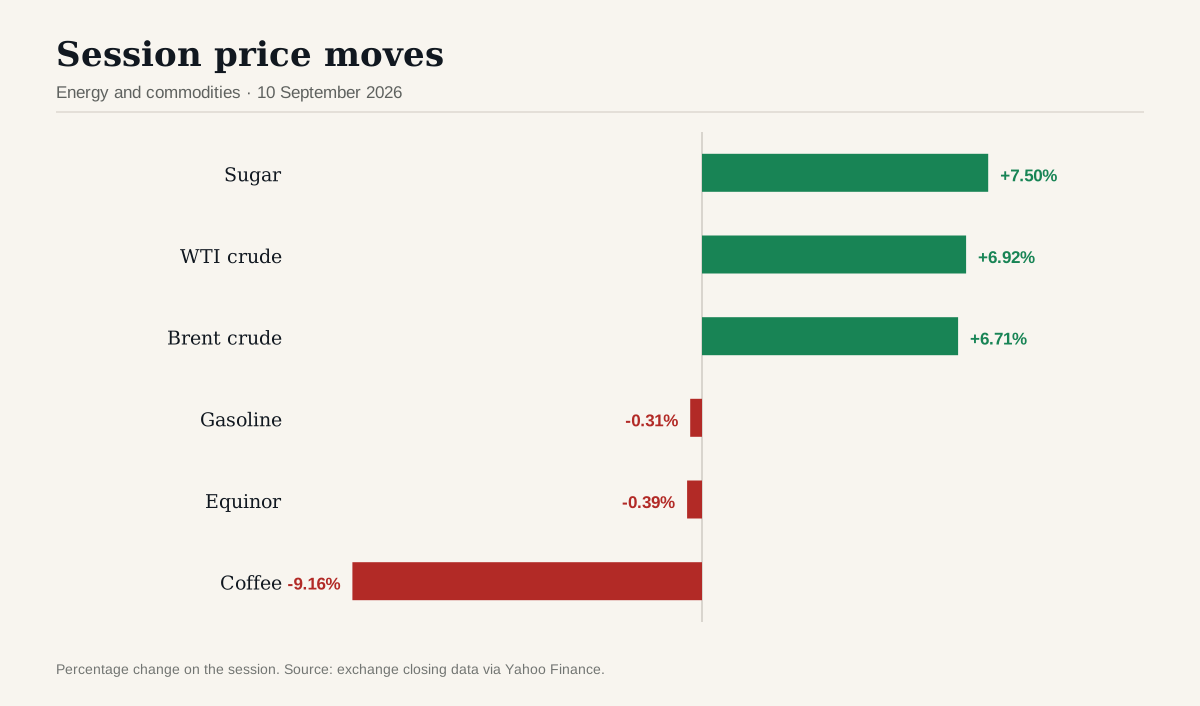
On 10 September 2026 sugar futures rose 7.5 per cent to US$19.78 a tonne, the strongest daily gain among the 20 contracts that traded. At the same time West Texas Intermediate crude closed at US$102.7 a barrel, up 6.9 per cent, and Brent crude finished at US$108 a barrel, up 6.7 per cent. European buyers of these dollar‑denominated commodities settle in euros, and the euro weakened to 1.1618 per dollar, a 0.08 per cent decline on the day. The combination of higher oil prices and a slightly weaker euro raises the effective cost of fuel, feedstock and transport for European firms.
- Euro to dollar 1.1618 at close, down 0.08 per cent
- WTI crude US$102.7, up 6.92 per cent
- Brent crude US$108, up 6.71 per cent
- Sugar US$19.78, up 7.50 per cent
- Coffee US$289.95, down 9.16 per cent
Energy contracts react to oil rally
| Instrument | Close | Day | 5-day | Volume vs avg |
|---|---|---|---|---|
| Sugar USX | 19.78 | +7.50% | +5.78% | 1.36x |
| WTI crude USD | 102.7 | +6.92% | +12.84% | 1.37x |
| Brent crude USD | 108 | +6.71% | +12.94% | 1.9x |
| Gasoline USD | 3.2 | -0.31% | +3.12% | 1.16x |
| Equinor NOK | 413.8 | -0.39% | +1.97% | 1.66x |
| Coffee USX | 289.95 | -9.16% | -11.71% | 7.44x |
| Source: exchange closing data via Yahoo Finance, session of 2026-09-10. | ||||
WTI crude finished the session at US$102.7, a rise of 6.92 per cent from the previous close of US$96.05. The contract traded at a volume 1.37 times the 20 day average and sits 14.0 per cent below its 52 week high of US$119.48. Brent crude mirrored the move, ending at US$108, up 6.71 per cent from US$101.21, with a volume 1.9 times the 20 day average and a price 14.4 per cent below its 52 week high of US$126.10.
Gasoline futures slipped modestly, closing at US$3.2006, a 0.31 per cent decline from US$3.2106. Volume was 1.16 times the 20 day average and the price remains 16.3 per cent below the 52 week high of US$3.8232. The modest pull‑back follows the broader oil surge and reflects the lag between crude price movements and retail fuel pricing.
Agricultural contracts move in opposite directions
Sugar futures on the ICE platform rose sharply to US$19.78, up 7.50 per cent from US$18.40. The contract traded at a volume 1.36 times the 20 day average and is now only 0.6 per cent below its 52 week high of US$19.90. Market commentary linked the jump to the recent surge in crude oil, noting that higher energy costs lift the price of agricultural inputs and transport, which feed through to sugar production costs.
By contrast coffee futures fell sharply, closing at US$289.95, down 9.16 per cent from US$319.20. Volume was 7.44 times the 20 day average, indicating a pronounced shift in market sentiment. The price sits 33.8 per cent below the 52 week high of US$437.95, reflecting a broader pull‑back in soft commodity prices after a period of strong demand and supply concerns.
Listed majors and utilities feel the pressure
Equinor, the Oslo‑listed energy group, saw its shares close at NOK 413.8, a 0.39 per cent dip from NOK 415.4. The stock traded at a volume 1.66 times the 20 day average and remains 2.7 per cent below its 52 week high of NOK 425.5. The modest decline came amid reports of European natural gas prices reaching a four‑year high, a development that can boost revenue from gas sales but also raises concerns about higher input costs for downstream users.
Among the broader set of 20 companies that traded, 15 posted gains while five recorded losses. Refiners and transport‑focused firms have higher margins on crude, while utilities and industrial users have higher fuel and feedstock costs.
Implications for European business costs
For manufacturers that rely on refined products, the rise in WTI and Brent prices improves refining margins, potentially supporting profitability for European refiners that import crude. However, the euro's 0.08 per cent weakening against the dollar means that the cost advantage is partially offset for any euro‑denominated expenses. The net effect depends on the proportion of costs that are settled in dollars versus euros.
Transport operators, logistics firms and airlines will see higher fuel bills. The 6.9 per cent jump in WTI translates into a comparable increase in jet fuel and diesel costs, subject to the euro‑dollar exchange rate. A weaker euro adds roughly one tenth of a per cent to the effective price, a modest but measurable addition to operating expenses.
Companies in the chemicals sector, which use natural gas and oil as feedstocks, face a dual pressure. Higher crude prices raise the cost of petrochemical feedstocks, while the surge in European gas prices, reflected in the rise of Equinor's share price, adds to the cost of gas‑based processes. The combined effect can compress margins unless firms can pass on costs to customers.
Food manufacturers and retailers must watch the sugar and coffee moves closely. Sugar's 7.5 per cent rise pushes the cost of confectionery, baked goods and beverages higher. The price is still near its 52 week peak, leaving little room for further upside without triggering price adjustments downstream. Coffee's 9.2 per cent fall eases input costs for coffee roasters, but the price remains well below its recent highs, suggesting limited upside for cost recovery.
Overall, the session's price action indicates that European firms will face higher input costs across several key inputs. The magnitude of the impact will vary by exposure to dollar‑denominated commodities and the ability to hedge currency risk. Companies that have locked in oil purchases at lower rates will be insulated, while those that rely on spot purchases will see their cost base rise.
What the numbers say for the coming weeks
The euro's 52 week range of 1.1325 to 1.2024 places the close 3.4 per cent below the 52 week high, suggesting limited upside in the short term. Oil prices remain 14 per cent below their 52 week peaks, leaving room for further rallies if geopolitical tensions persist. Sugar sits just 0.6 per cent below its 52 week high, indicating that the market may be approaching a ceiling unless a new supply shock emerges.
Investors and corporate treasurers should monitor the euro‑dollar rate closely, as any further weakening will amplify the cost impact of oil and refined product price moves. Likewise, the volume spikes in coffee and sugar contracts, 7.44 and 1.36 times the 20 day average respectively, signal heightened trading activity that could translate into price volatility in the near term.
The session closed on 10 September 2026 with the euro at 1.1618 per dollar, WTI at US$102.7, Brent at US$108, sugar at US$19.78 and coffee at US$289.95.
Equinor · three-month price
Chart: TradingView. Live prices may differ from the closing figures quoted above.