
Sugar surges to near 52-week high as coffee collapses on Brazilian supply
Raw sugar futures jumped 6.9 per cent to within half a percent of a one-year peak while arabica coffee fell 8.6 per cent on heavy volume, leaving European food manufacturers facing divergent input-cost pressures.
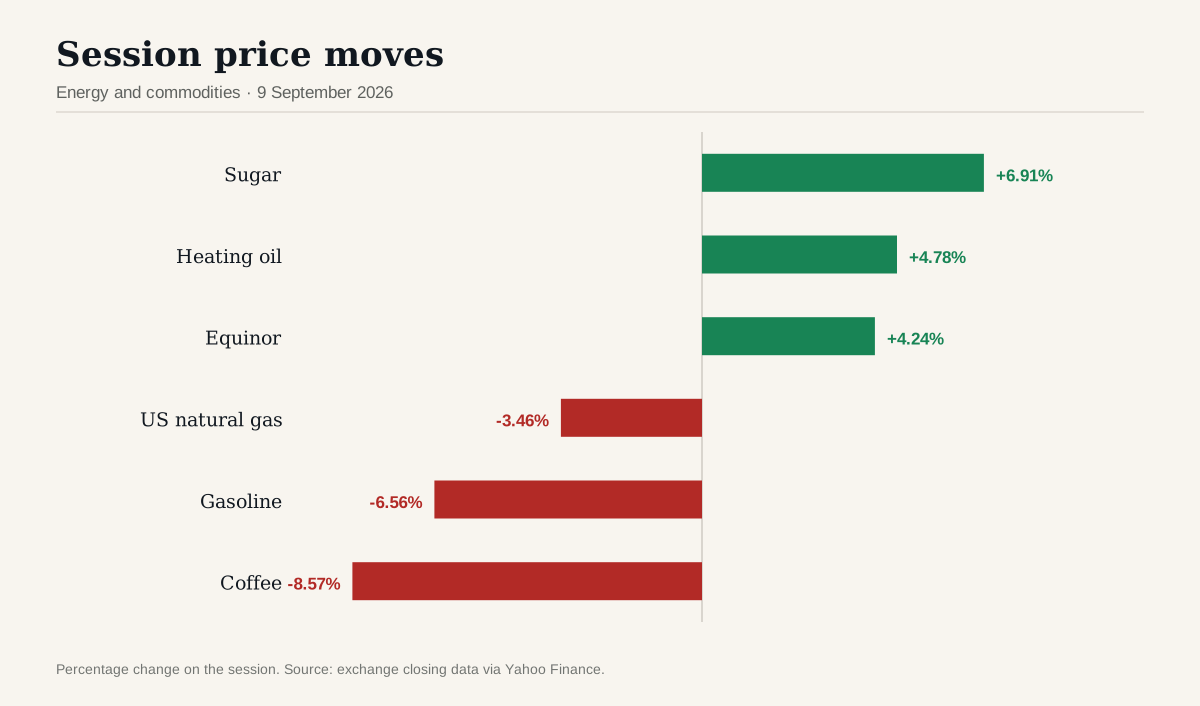
Raw sugar futures on ICE closed at 19.35 US cents a pound, up 6.9 per cent on the session and 17.5 per cent over the past month, leaving the contract 0.5 per cent below its 52-week high of 19.45. The move came on volume 1.4 times the 20-day average. Reported headlines cited a declining output outlook for Thailand and smaller import expectations from India, though a separate report noted prices had slipped on the Indian import outlook earlier in the week. For European confectionery, beverage and processed-food producers, the rally lifts the dollar-denominated raw material cost at a time when the euro has barely moved, trading at 1.1639 against the dollar, up 0.1 per cent on the day and 0.8 per cent over the past month.
- Sugar (SB=F): 19.35 US cents/lb, +6.91% day, +17.49% 1-month, 0.5% below 52-week high
- Heating oil (HO=F): $4.7861/gal, +4.78% day, +14.23% 1-month, 1.0% below 52-week high
- Equinor (EQNR.OL): NOK 415.4, +4.24% day, +8.26% 1-month, 1.6% below 52-week high
- Coffee (KC=F): 291.15 US cents/lb, -8.57% day, -12.38% 1-month, 33.5% below 52-week high
- Gasoline (RB=F): $3.0392/gal, -6.56% day, -3.07% 1-month, 20.5% below 52-week high
- US natural gas (NG=F): $2.815/MMBtu, -3.46% day, +0.75% 1-month, 64.0% below 52-week high
- EUR/USD: 1.1639, +0.10% day, +0.80% 1-month, 3.2% below 52-week high
Energy contracts split between distillates and gasoline
| Instrument | Close | Day | 5-day | Volume vs avg |
|---|---|---|---|---|
| Sugar USX | 19.35 | +6.91% | +5.39% | 1.4x |
| Heating oil USD | 4.79 | +4.78% | +2.33% | 1.2x |
| Equinor NOK | 415.4 | +4.24% | +2.47% | 1.49x |
| US natural gas USD | 2.82 | -3.46% | -3.06% | 0.95x |
| Gasoline USD | 3.04 | -6.56% | -3.06% | 1.33x |
| Coffee USX | 291.15 | -8.57% | -14.93% | 4.69x |
| Source: exchange closing data via Yahoo Finance, session of 2026-09-09. | ||||
Heating oil, the NY Mercantile benchmark for distillate fuel, rose 4.8 per cent to $4.7861 a gallon, its highest level since the 52-week peak of $4.8353. The contract has gained 14.2 per cent over the past month on volume 1.2 times the 20-day average. Reported headlines noted that gasoline prices had been high for the period, while the gasoline contract fell 6.6 per cent to $3.0392 a gallon, 20.5 per cent below its 52-week high of $3.8232. The divergence between heating oil and gasoline cracks suggests refining margins are shifting toward distillate strength, a pattern that typically benefits European integrated majors with heavy diesel exposure.
US natural gas dropped 3.5 per cent to $2.815 per million British thermal units, leaving the contract 64 per cent below its 52-week high of $7.827. Volume was 0.95 times the 20-day average. Reported headlines included a court blocking a Trump-backed pipeline into New York, an open season launch for the Nash storage hub on the Gulf Coast, and subsea contract awards for McDermott and Saipem in the Eastern Mediterranean and Turkey. An EY study noted US oil and gas producers reached record production while investing more selectively. For European gas buyers, the Henry Hub price remains a reference for LNG netback economics, though the euro's modest appreciation against the dollar provides a slight offset.
Agricultural markets show extreme divergence
Arabica coffee futures collapsed 8.6 per cent to 291.15 US cents a pound, the largest single-day decline among the tracked contracts. The price is now 33.5 per cent below its 52-week high of 437.95, reached earlier in the year. Volume surged to 4.7 times the 20-day average, the highest relative volume in the dataset. Reported headlines attributed the fall to increased supplies from Brazil hitting the market. The 14.9 per cent five-day decline and 12.4 per cent one-month drop suggest a sustained liquidation rather than a single-session correction. European roasters and retail chains that hedge forward will see lower replacement costs, though the speed of the move may have caught some short-hedge positions offside.
Sugar's rally to the upper edge of its 52-week range (13.22 to 19.45) contrasts sharply with coffee's retreat from its highs. The two soft commodities often move on different weather and policy drivers, sugar sensitive to Thai and Indian policy, coffee to Brazilian harvest progress, but the simultaneous extreme moves create a mixed picture for European food manufacturers. A company with exposure to both inputs sees no net relief.
Equinor leads European energy equities higher
Equinor shares rose 4.2 per cent to NOK 415.4 in Oslo, on volume 1.49 times the 20-day average. The stock is now 1.6 per cent below its 52-week high of NOK 422.3 and has gained 8.3 per cent over the past month. The move followed reported headlines citing a broad European equity decline driven by intensified Middle East conflict pushing up oil prices, alongside market chatter about potential buyer interest in BP's North Sea operations. European equities traded as American depositary receipts also declined in US trading on Wednesday and Tuesday, according to separate reports. Equinor's outperformance relative to the broader European energy equity weakness suggests company-specific or regional factors, possibly the North Sea asset chatter, supported the stock despite the wider sector pressure.
No other European energy majors or utilities appeared in the top movers list. Of the 20 companies that traded in the session, 15 rose and 5 fell, indicating broad positive breadth despite the mixed commodity signals.
European cost implications: refining, chemicals and food
The heating oil rally to near its 52-week high tightens distillate cracks, which feeds directly into European refining margins. Northwest European refineries configured for diesel yield benefit when the gasoil crack strengthens relative to gasoline. The gasoline contract's 6.6 per cent drop widens that spread further. For integrated majors such as TotalEnergies, Eni, Repsol and BP, the margin environment is constructive on the distillate side, though the gasoline weakness offsets part of the gain.
For European chemical producers, particularly those using naphtha or LPG as feedstock, the distillate strength does not directly lower input costs but signals tight middle-distillate markets that can pull naphtha prices higher. The 64 per cent discount of US natural gas to its 52-week high keeps ethane economics favourable for US crackers, maintaining a cost advantage over European naphtha-based ethylene. The euro at 1.1639, 3.2 per cent below its 52-week high of 1.2024, means European buyers pay more in local currency for dollar-priced energy than they would at the peak.
In food manufacturing, the sugar rally adds cost pressure for confectionery, soft drinks and baked goods producers. The coffee collapse provides relief for roasters such as JDE Peet's, Nestlé's coffee division and Lavazza, though the 33.5 per cent distance from the 52-week high means the benefit is measured against a historically elevated base. Forward hedging programmes will determine the timing of any P&L impact.
Next data points
The US Energy Information Administration releases weekly petroleum status data on Thursday, which will show whether distillate inventories continue to draw. The International Sugar Organization's quarterly update is due later this month and may revise the Thai production outlook that underpinned today's rally. Coffee traders will watch the next Brazilian harvest progress reports for confirmation of the supply surge that drove today's 8.6 per cent decline.
Equinor · three-month price
Chart: TradingView. Live prices may differ from the closing figures quoted above.