
copper climbs 2.1% as European manufacturers brace for higher input costs
Copper futures rose 2.14% to $6.88 while platinum and silver posted stronger gains. Steel‑maker Acerinox, miner Anglo American and Boliden all slipped, hinting at margin pressure for European industry.
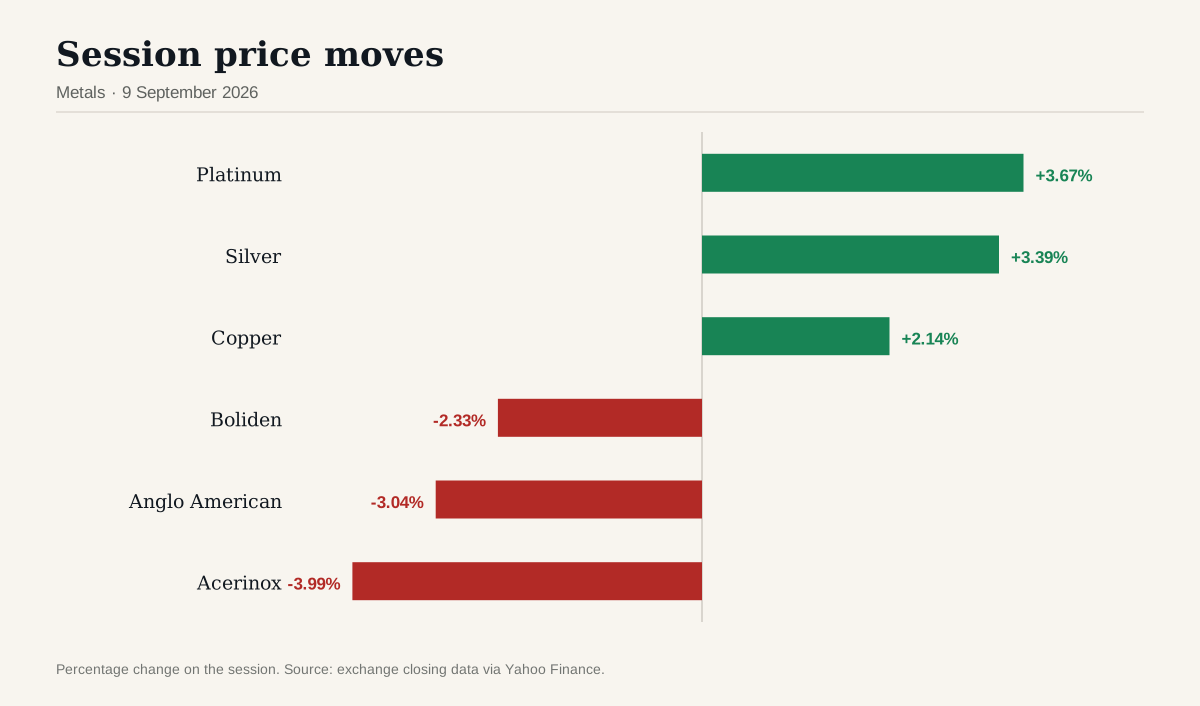
Platinum futures closed up 3.67% at $1,916, Silver at $68.55 gained 3.39% and Copper rose 2.14% to $6.883 on the COMEX. The moves came after a series of company reports that highlighted surplus forecasts, high-grade discoveries and record-high prices. For European manufacturers that rely on these metals, from automotive catalytic converters to renewable-energy cables, the price shifts translate directly into higher input costs.
- Platinum: +3.67% to $1,916 per ounce
- Silver: +3.39% to $68.545 per ounce
- Copper: +2.14% to $6.883 per pound
- US dollar index:, 0.09% to 98.747
metal price dynamics and European cost exposure
| Instrument | Close | Day | 5-day | Volume vs avg |
|---|---|---|---|---|
| Platinum USD | 1,916 | +3.67% | +8.77% | 404.01x |
| Silver USD | 68.55 | +3.39% | +6.08% | 30.52x |
| Copper USD | 6.88 | +2.14% | +5.79% | 18.4x |
| Boliden SEK | 571.2 | -2.33% | +3.63% | 0.82x |
| Anglo American GBp | 4,175 | -3.04% | +0.99% | 0.53x |
| Acerinox EUR | 54.32 | -3.99% | -3.17% | 1.33x |
| Source: exchange closing data via Yahoo Finance, session of 2026-09-09. | ||||
The three precious and industrial metals that led the session each sit at a different point in their 52-week ranges. Platinum is 32.8% below its 52-week high of $2,852.4, while Silver remains 43.5% below its 52-week high of $121.3. Copper is only 0.2% below its 52-week peak of $6.894, indicating that the market is near the top of the recent cycle.
For European industry, the price trajectory matters more than the absolute level. A 3.67% rise in platinum pushes the cost of automotive catalytic converters, a key component for meeting EU emissions standards, higher. The same move adds pressure to jewellery manufacturers and to the niche market of platinum-based fuel-cell components.
Silver's 3.39% gain affects sectors that use the metal for electrical contacts, photovoltaic cells and high-frequency electronics. The metal's price is still well under its 52-week high, but the upward momentum suggests that downstream users may see a modest cost uptick in the next quarter.
Copper, the workhorse of the energy transition, is the most directly linked to European grid-expansion projects. The 2.14% rise brings the price within striking distance of the 52-week high, meaning that new cable contracts, offshore wind interconnectors and electric-vehicle charging infrastructure will be priced on a higher base. The price move follows reports that "copper hits record highs while smelters lose money on every ton", a situation that typically squeezes the margin between mine output and downstream processing.
The US dollar index slipped 0.09% to 98.747, a modest weakening that traditionally supports commodity prices priced in dollars. The dollar's 5-day decline of 0.93% and 1-month fall of 1.07% provide a backdrop that reinforces the metal gains observed.
listed producers react against the metal backdrop
Among the 14 European-listed metal-related companies that traded, six rose and eight fell. The three biggest decliners were Acerinox, Anglo American and Boliden, each moving in the opposite direction to the metal that underpins a large part of their revenue.
Acerinox (AMS.MC) closed at €54.32, down 3.99% on the day. The steelmaker's share price fell despite the broader metal rally, suggesting that the market may be pricing in weaker steel margins or concerns about demand in construction and automotive sectors that use steel alongside copper and platinum. The stock is now 22.0% below its 52-week high of €69.68, and trading volume was 1.33 times the 20-day average, indicating a modest level of investor interest.
Anglo American (AAL.L) slipped 3.04% to 4,175 gbp, even as copper rallied. The diversified miner's price movement followed a report titled "Copper Prices Hit Record High. These Stocks Are Jumping." The contrast between the headline and the share decline points to possible exposure to other commodities in Anglo's portfolio, such as iron ore, coal or diamonds, that may be under pressure, or to broader equity market sentiment. The share is now 4.0% below its 52-week high of £4,348 and traded at only 0.53 times the 20-day average volume, a sign of reduced liquidity.
Boliden (BOL.ST) fell 2.33% to SEK 571.2. The Swedish miner, which produces copper, zinc and gold, saw its stock decline while copper prices were rising. The move could reflect concerns about the cost of copper extraction, inventory levels or the impact of the recent "surplus" forecast for platinum on broader precious-metal pricing. Boliden's price is 21.5% below its 52-week high of SEK 727.8 and traded at 0.82 times the 20-day average.
The metal price gains and the share price declines of these producers moved in opposite directions. Margins can be squeezed by rising extraction costs, inventory pressures or demand-side weakness in downstream markets.
implications for european industrial cost structures
European manufacturers that consume platinum, silver and copper will see their cost bases adjust in line with the price moves reported above. The impact will be felt most acutely in sectors where the metal forms a large proportion of the bill of materials.
Automotive OEMs, for example, must factor a higher platinum price into the cost of catalytic converters, which are mandated by EU emissions regulations. Even a 3.67% rise can add several euros per vehicle, eroding profit margins unless manufacturers can pass the cost onto buyers or improve converter efficiency.
Electronics firms that rely on silver for contacts and solders will see a similar cost increase. While silver's price is still well below its 52-week high, the 3.39% rise adds to the material bill for printed-circuit boards and photovoltaic modules, potentially tightening margins in a sector already facing price competition from Asian manufacturers.
The copper price surge is the most consequential for the energy-transition agenda. Grid-scale projects, offshore wind farms and electric-vehicle charging networks all depend on large volumes of copper cable. A 2.14% rise in the futures price lifts the cost of new installations and may affect the economics of projects that were priced on the assumption of lower copper costs. Companies that have long-term supply contracts may be insulated, but those that purchase on spot markets will see higher expenses.
At the same time, the share-price declines of Acerinox, Anglo American and Boliden suggest that the market is wary of the profitability of the upstream side of the supply chain. If miners and steel producers cannot maintain margins, they may be less inclined to invest in capacity expansion, which could tighten supply and keep European input costs elevated for longer.
outlook and next data point
The next scheduled earnings release for Acerinox is due on 2026-10-15, while Anglo American will publish its quarterly results on 2026-11-02. Boliden is slated to report on 2026-10-28. Those filings will reveal whether the share-price moves observed on 2026-09-09 were short-term reactions or the start of a broader earnings-driven trend.
Investors and corporate procurement teams should watch the upcoming reports for clues on margin trajectories, capital-expenditure plans and any guidance on pricing strategies that could affect the cost of metal inputs for European industry.
Acerinox · three-month price
Chart: TradingView. Live prices may differ from the closing figures quoted above.