
Sugar and corn surge while the euro slips against the dollar
European buyers faced higher dollar‑denominated energy costs as the euro fell 0.42% and commodity prices moved sharply, with sugar up 5.0% and corn up 4.5% on the session of 14 September 2026.
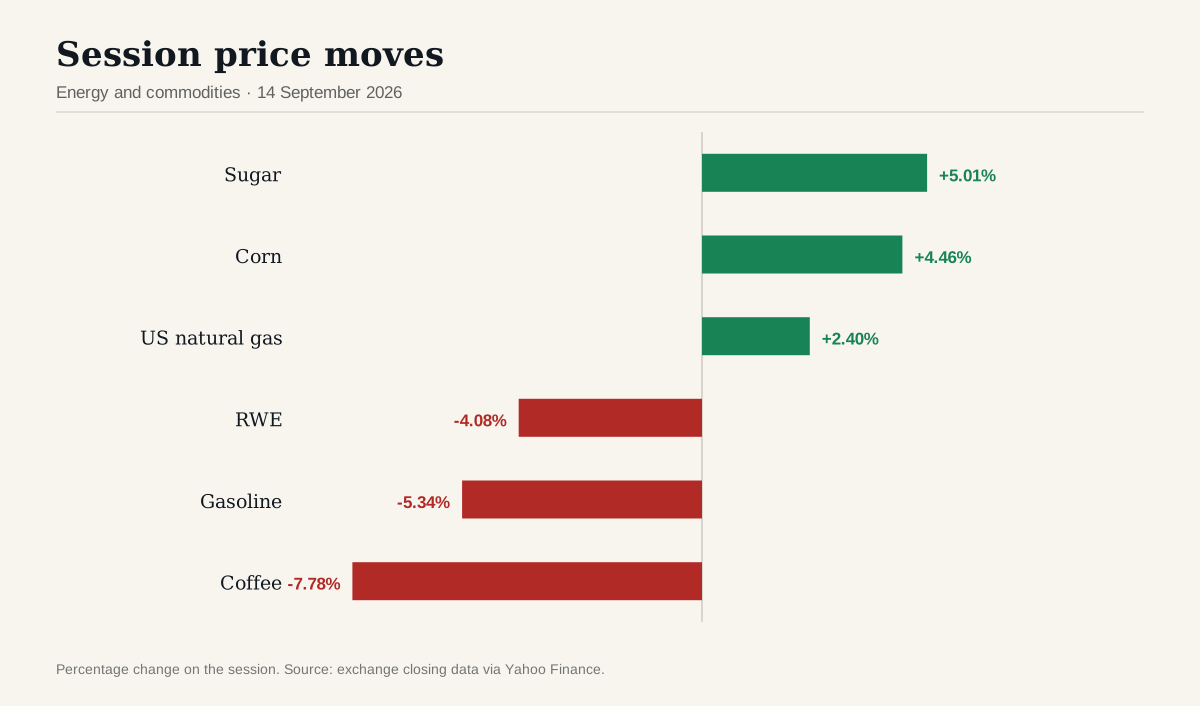
On 14 September 2026 the most active move was a 5.01 per cent rise in the ICE Futures sugar contract, which closed at US$ 19.06 a pound. The price is now 1.3 per cent below its 52‑week high of US$ 19.32. The rally came as the euro weakened against the dollar, closing at 1.1561 and slipping 0.42 per cent on the day.
- EUR/USD close 1.1561, down 0.42 per cent on the day
- Sugar close US$ 19.06, up 5.01 per cent on the day
- Corn close US$ 533, up 4.46 per cent on the day
- US natural gas close US$ 2.899, up 2.40 per cent on the day
- RWE share price close € 57.4, down 4.08 per cent on the day
Energy market dynamics
| Instrument | Close | Day | 5-day | Volume vs avg |
|---|---|---|---|---|
| Sugar USX | 19.06 | +5.01% | +5.48% | 1.17x |
| Corn USX | 533 | +4.46% | +4.10% | 2.64x |
| US natural gas USD | 2.9 | +2.40% | -2.55% | 1.01x |
| RWE EUR | 57.4 | -4.08% | -1.71% | 2.52x |
| Gasoline USD | 3.13 | -5.34% | -2.61% | 1.25x |
| Coffee USX | 289.25 | -7.78% | -10.79% | 6.37x |
| Source: exchange closing data via Yahoo Finance, session of 2026-09-14. | ||||
The euro's 0.42 per cent decline against the dollar raises the euro‑price of all dollar‑denominated energy contracts. European utilities and industrial consumers therefore face a higher effective cost for imported fuel even when the headline commodity price moves modestly. In the case of US natural gas, the contract rose 2.40 per cent to US$ 2.899 per million British thermal units. Because the euro is weaker, the euro‑price increase is amplified for European buyers, adding pressure to power generators that rely on gas‑fired capacity.
Natural gas also recorded a 5‑day decline of 2.55 per cent, indicating that the recent 2.40 per cent daily gain may be a short‑term bounce. The 1‑month gain of 6.31 per cent suggests a broader upward trend over the past four weeks, but the 63.0 per cent distance from the 52‑week high shows ample headroom for further moves. For European chemical producers, which use natural gas as a feedstock, the net effect of a weaker euro and a rising gas price is a squeeze on margins unless they can pass costs onto downstream customers.
Impact on power generation and industrial heat
Power plants that purchase gas on the spot market will see their input cost rise in euro terms. The combination of a weaker euro and a higher gas price could translate into higher electricity tariffs for industrial users, especially in countries that have not yet secured long‑term contracts at fixed prices. The reported European gas price jump of 6 per cent after a Saudi pipeline shutdown adds a geopolitical layer, but the data set does not quantify the effect on European spot prices.
Agricultural contracts on the move
Sugar and corn both posted double‑digit monthly gains, reflecting a broader rally in soft commodities. Sugar's 5.01 per cent daily increase lifted the contract to US$ 19.06, a level only 1.3 per cent shy of its 52‑week peak. Corn advanced 4.46 per cent to US$ 533, now 0.7 per cent below its 52‑week high of US$ 536.5. Both contracts traded at volumes above the 20‑day average, indicating heightened market participation.
For European food manufacturers, the rise in sugar and corn prices raises the cost of confectionery, baked goods and animal feed. The 13.32 per cent monthly gain in sugar and the 18.97 per cent monthly gain in corn suggest that input costs have risen sharply since the start of August. Companies that have not locked in forward contracts may see profit margins erode unless they can shift the price increase to consumers.
Coffee's sharp decline
In contrast, the ICE Futures coffee contract fell 7.78 per cent to US$ 289.25, a level 34.0 per cent below its 52‑week high. The volume of 6.37 times the 20‑day average points to strong trading activity, possibly driven by profit‑taking after a recent rally. European coffee roasters and retailers will benefit from the lower price, but the decline may also reflect broader demand concerns in key export markets.
Listed majors and utilities
The energy‑focused utility RWE saw its XETRA share price close at € 57.4, down 4.08 per cent on the day. The stock is trading 7.4 per cent below its 52‑week high of € 62. The decline follows a report of strengthened offshore wind cooperation between the United Arab Emirates and RWE. While the partnership may open new project pipelines, the market reaction suggests that investors are weighing short‑term earnings pressure against long‑term growth prospects.
RWE's share price movement is not directly linked to the underlying commodity prices listed above, but the broader energy price environment influences the utility's revenue outlook. Higher gas prices can increase the cost of gas‑fired generation, while a weaker euro raises the euro cost of imported fuel. Conversely, the surge in sugar and corn does not affect RWE's core business, but the overall inflationary pressure from rising commodity costs may affect consumer demand for electricity.
What the moves mean for European costs
European manufacturers that rely on energy‑intensive processes face a two‑fold cost pressure. First, the euro's 0.42 per cent decline against the dollar raises the euro price of imported fuel, including natural gas, which rose 2.40 per cent in dollar terms. Second, the sharp rise in sugar and corn prices adds to the cost of food‑related production lines. Companies that have not hedged these inputs may see operating margins tighten.
For the transport sector, the 5.34 per cent fall in the NY Mercantile gasoline contract to US$ 3.1306 per gallon reduces the dollar price of fuel, but the weaker euro partially offsets the benefit for European importers. The gasoline contract remains 18.1 per cent below its 52‑week high, indicating that the price is still well under the peak observed earlier in the year.
Overall, the session's price action suggests that European businesses should review their exposure to dollar‑denominated commodities. A weaker euro amplifies the euro‑cost of any dollar‑priced input, while the commodity price moves themselves can be sizable. Companies with long‑term contracts locked in at earlier rates may be insulated, but those relying on spot purchases will need to manage the combined currency‑commodity risk.
Strategic considerations for risk management
Enterprises can mitigate exposure by expanding the use of currency hedges, negotiating longer‑term supply contracts, or diversifying input sources. The data shows that the euro is 3.9 per cent below its 52‑week high, leaving room for further depreciation, which would exacerbate the cost impact of any future commodity price rises.
Upcoming dates
The next European energy market report is scheduled for 21 September 2026, when the euro‑dollar exchange rate and commodity prices will be reassessed.
RWE · three-month price
Chart: TradingView. Live prices may differ from the closing figures quoted above.