
silver price slides as rate‑hike expectations rise
Silver fell 0.60% to US$64.165 on 14 September 2026, a move that trims input costs for European electronics and solar‑panel makers while the broader metal sector saw most listed producers lose ground.
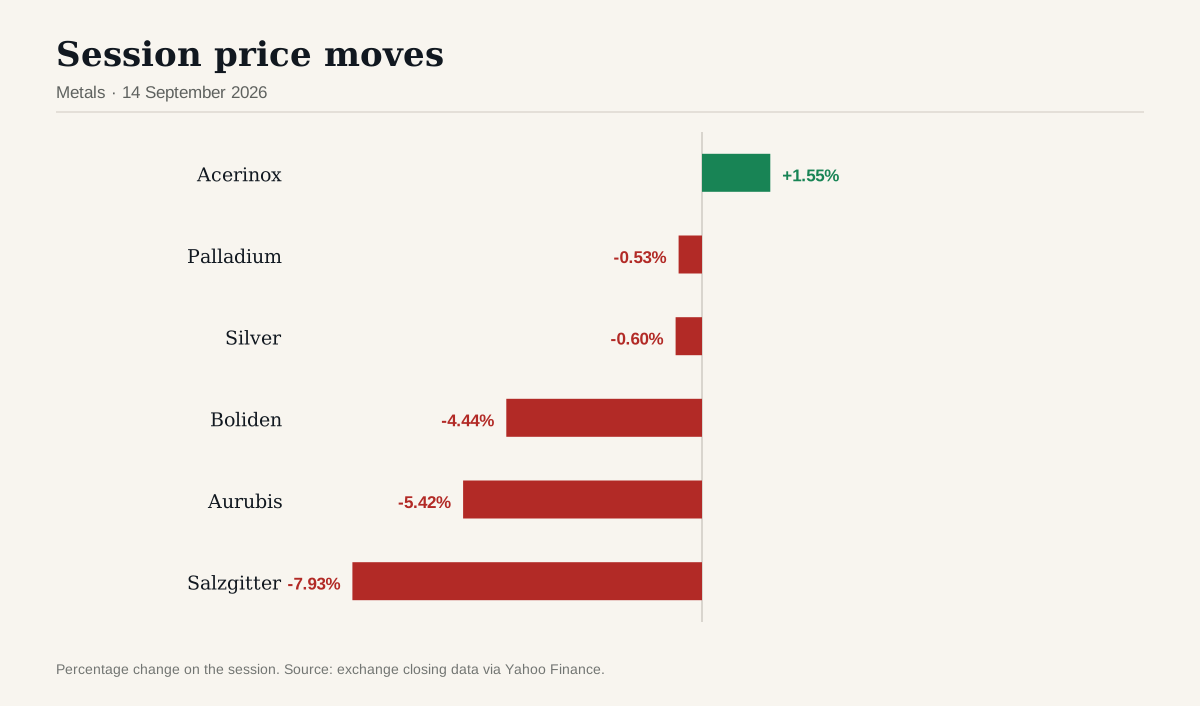
Silver closed at US$64.165 on 14 September 2026, down 0.60 per cent on the day. The decline came after expectations that central banks will raise rates, a factor that lifted the US dollar index and added pressure on precious‑metal prices. For European manufacturers that use silver in conductors, photovoltaic cells and high‑frequency components, the price move translates into a modest reduction in material cost.
- Silver price US$64.165 per ounce, closing level on the session
- Palladium price US$1,304 per ounce, down 0.53 per cent
- US dollar index 99.423, up 0.31 per cent
- Acerinox share EUR 55.02, up 1.55 per cent
- Salzgitter share EUR 51.1, down 7.93 per cent
Silver price slides after rate‑hike expectations grow
| Instrument | Close | Day | 5-day | Volume vs avg |
|---|---|---|---|---|
| Acerinox EUR | 55.02 | +1.55% | -4.48% | 0.83x |
| Palladium USD | 1,304 | -0.53% | -6.19% | 9.33x |
| Silver USD | 64.17 | -0.60% | -2.85% | 24.92x |
| Boliden SEK | 525.6 | -4.44% | -4.02% | 0.77x |
| Aurubis EUR | 163.9 | -5.42% | -5.80% | 2.15x |
| Salzgitter EUR | 51.1 | -7.93% | -15.33% | 1.51x |
| Source: exchange closing data via Yahoo Finance, session of 2026-09-14. | ||||
The COMEX contract for silver fell 0.60 per cent, while trading volume surged to almost 25 times the 20‑day average. The move coincided with a 0.31 per cent rise in the US dollar index, which was 2.3 per cent below its 52‑week high of 101.8. A stronger dollar typically depresses dollar‑denominated metal prices, and the market's focus on potential rate hikes amplified the effect.
European firms that purchase silver as a component in printed‑circuit boards, automotive electronics and solar‑panel interconnects will see a marginal easing of input cost. The price decline is modest, less than one euro per ounce when converted, but for high‑volume users the cumulative effect can be noticeable on quarterly cost statements.
At the same time, a series of miner‑related reports highlighted the sector's cash position. One note described silver miners as sitting on a record cash hoard, more than double the level seen during the 2011 rally. While the cash surplus does not directly affect European buyers, it signals that mining companies may have the flexibility to sustain production without immediate price pressure, potentially keeping supply steady.
Other precious‑metal moves and the currency backdrop
The palladium contract slipped 0.53 per cent to US$1,304, also trading at a volume well above the recent average. Palladium's 52‑week range spans US$1,150.8 to US$2,169.9, leaving the current level 39.9 per cent below the high. Both precious metals fell as the dollar strengthened.
Across the currency front, the US dollar index closed at 99.423, a 0.31 per cent rise on the day and a 0.27 per cent gain over the past five days. The index sits 2.3 per cent below its 52‑week peak, suggesting that while the dollar remains firm, it is not at an extreme level. The modest appreciation contributed to the downward pressure on silver and palladium, as both metals are priced in dollars.
European metal producers under pressure
Among the 14 listed metal companies that traded, only one posted a gain. The breadth of the market was heavily weighted to the downside, with 13 firms closing lower.
Acerinox, the Spanish stainless‑steel specialist, rose 1.55 per cent to EUR 55.02. The stock's 52‑week range is EUR 46.21 to EUR 69.3, leaving the current price 20.6 per cent below the high. The modest rally came despite a five‑day decline of 4.48 per cent, indicating that the move may be a short‑term reaction rather than a shift in longer‑term sentiment.
Salzgitter, the German steel producer, suffered the steepest fall, dropping 7.93 per cent to EUR 51.1. The share is now 24.4 per cent below its 52‑week high of EUR 67.6 after a one‑month decline of 1.26 per cent. The five‑day slide of 15.33 per cent points to heightened pressure on the German steel sector, which faces elevated input costs from raw‑material price volatility and a competitive export market.
Aurubis, a leading copper recycler listed in Germany, slipped 5.42 per cent to EUR 163.9, a level 27.2 per cent under its 52‑week high of EUR 225.2. The company's five‑day performance mirrored the daily decline, suggesting that the market is pricing in tighter copper margins as the base metal price remains under pressure.
Boliden, the Swedish miner with a focus on zinc and copper, fell 4.44 per cent to SEK 525.6, now 27.8 per cent below its 52‑week high of SEK 727.8. The one‑month change was modest at, 0.42 per cent, but the five‑day slide of 4.02 per cent aligns with the broader downturn in European metal equities.
All four laggards are positioned in sectors where input costs are closely linked to the price of copper, zinc or steel scrap. The lack of a rally in copper futures, not detailed in the data, means that these producers are likely seeing margin compression, which can translate into lower earnings and potentially reduced capital spending.
Implications for European industrial cost structures
For European manufacturers, the interplay between metal prices and producer margins matters for budgeting and pricing decisions. The modest dip in silver eases the cost of electronic components, but the broader decline in steel‑related equities signals that producers may be tightening margins, which could lead to higher prices for downstream users if producers seek to protect profitability.
Companies such as automotive OEMs, construction firms and renewable‑energy developers monitor both the spot price of the metal and the earnings trajectory of producers. A falling steel share price often precedes cost‑pass‑through pressures, especially when producers face higher financing costs or inventory write‑downs.
The session's breadth, one riser against 13 fallers, suggests a risk‑off tone among investors in the metal sector. The stronger dollar and the anticipation of higher rates appear to be the common thread linking the moves in precious metals and the equity performance of industrial producers.
Market context and next steps
The data set does not provide forward‑looking guidance from the companies, nor does it disclose any specific corporate announcements that would explain the equity moves. The absence of a stated catalyst for the declines means that market participants must watch upcoming earnings releases and any policy signals from European central banks for clues on whether the pressure on margins will intensify.
European firms that rely on copper, zinc or steel have upcoming quarterly reports from Aurubis and Boliden, and the performance of Acerinox will be observed as an indicator for the stainless‑steel market, which supplies the food‑processing and medical‑device sectors.
In the short term, the silver price movement provides a modest cost advantage for electronics manufacturers.
The session closed on 14 September 2026.
Acerinox · three-month price
Chart: TradingView. Live prices may differ from the closing figures quoted above.