
Palladium jumps 3.1% while boliden falls 2.9% on a mixed metals day
Palladium rose 3.12 per cent, silver 2.96 per cent and copper 1.43 per cent on Thursday. At the same time boliden slipped 2.85 per cent, arcelor mittal fell 1.02 per cent and rio tinto lost 0.44 per cent, a split that signals divergent margin pressure for European users of these inputs.
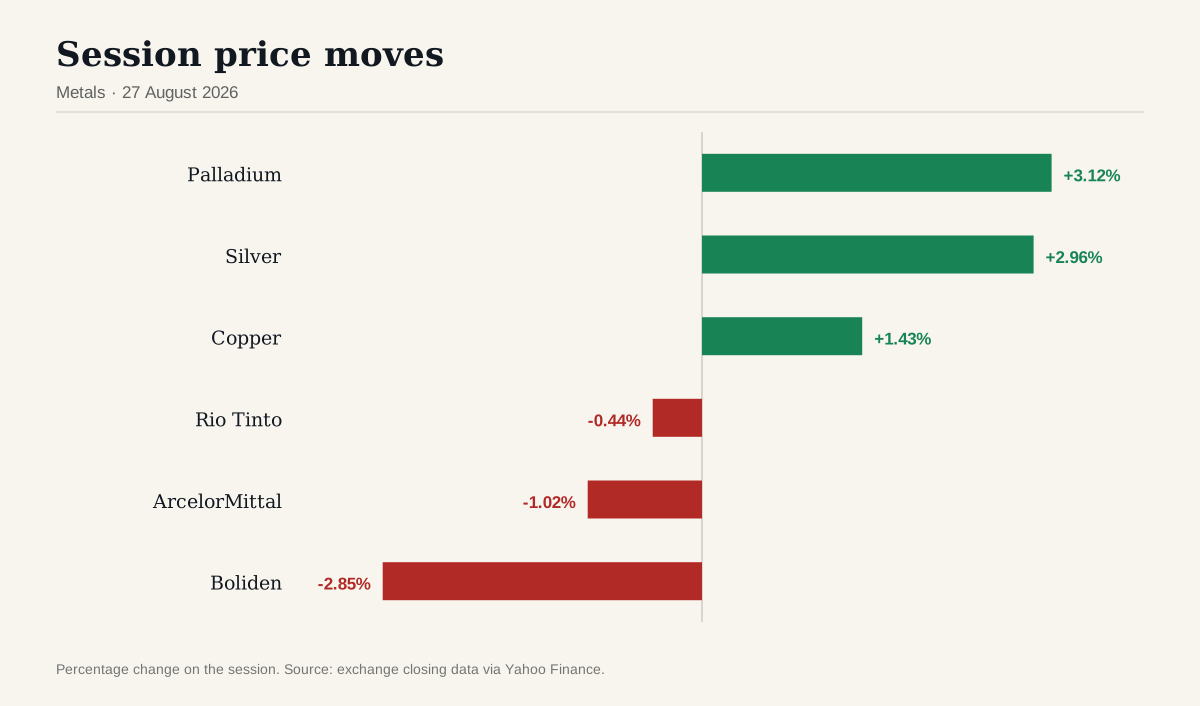
Palladium closed at USD 1366.5, up 3.12 per cent on the day, while silver settled at USD 70, a gain of 2.96 per cent and copper finished at USD 6.6885, up 1.43 per cent. The three metals all moved higher against a US dollar index that edged 0.01 per cent higher to 99.177. For European manufacturers that rely on these commodities, the price moves translate into higher input costs for automotive catalytic converters, electronics and wiring, while the equity market showed a mixed reaction: boliden shares fell 2.85 per cent, arcelor mittal slipped 1.02 per cent and rio tinto dropped 0.44 per cent.
- Palladium up 3.12 per cent to USD 1366.5
- Silver up 2.96 per cent to USD 70
- Copper up 1.43 per cent to USD 6.6885
- Boliden down 2.85 per cent to SEK 566.8
- US dollar index up 0.01 per cent to 99.177
Precious and industrial metal price moves
| Instrument | Close | Day | 5-day | Volume vs avg |
|---|---|---|---|---|
| Palladium USD | 1,366.5 | +3.12% | +2.26% | 1,151.5x |
| Silver USD | 70 | +2.96% | +2.90% | 865.61x |
| Copper USD | 6.69 | +1.43% | +3.54% | 39.63x |
| Rio Tinto GBp | 7,688 | -0.44% | +2.45% | 0.43x |
| ArcelorMittal EUR | 63.9 | -1.02% | +4.48% | 0.75x |
| Boliden SEK | 566.8 | -2.85% | +5.08% | 1.26x |
| Source: exchange closing data via Yahoo Finance, session of 2026-08-27. | ||||
Palladium posted the strongest daily gain among the three metals, adding 3.12 per cent to reach USD 1366.5. The price sits 37.0 per cent below its 52‑week high of USD 2169.9, indicating ample room before the top of the range is approached. Volume was 1151.5 times the 20‑day average, a level that suggests heightened trading activity. For European car makers, palladium is a key component of three‑way catalytic converters that meet stringent emissions standards. A rise in palladium cost directly lifts the expense of meeting those standards, potentially squeezing margins unless manufacturers can pass the cost onto buyers.
Silver advanced 2.96 per cent to USD 70, still 42.3 per cent below its 52‑week high of USD 121.3. Trading volume was 865.61 times the 20‑day average, confirming strong market interest. Silver is used in photovoltaic cells, high‑speed electronics and, to a lesser extent, in automotive applications. The price increase adds to the cost base of European manufacturers that source the metal for conductive inks and solar panel components, raising the breakeven point for projects that rely on thin‑film technology.
Copper rose 1.43 per cent to USD 6.6885, a level that is 0.9 per cent below its 52‑week high of USD 6.75. Volume was 39.63 times the 20‑day average, far lower than the precious‑metal volumes but still above the norm. Copper is the primary input for power cables, renewable‑energy grid connections and building wiring. A modest rise in copper price adds to the cost of new grid infrastructure and construction projects that are already facing labour and material shortages. The move also nudges the cost of electric‑vehicle charging stations, where copper accounts for a significant share of the wiring bill.
The US dollar index edged up 0.01 per cent to close at 99.177, 2.6 per cent below its 52‑week high. A stronger dollar typically exerts downward pressure on dollar‑priced commodities, yet all three metals rose, indicating that demand factors or market sentiment outweighed the currency effect on this session.
European listed producers react
Boliden fell 2.85 per cent to SEK 566.8, despite the metal rally. The stock is 22.1 per cent below its 52‑week high of SEK 727.8 but has posted a 5‑day gain of 5.08 per cent and a 1‑month gain of 22.37 per cent. The decline suggests that the market is pricing in margin compression for boliden, which derives a substantial portion of its earnings from copper and other base‑metal operations. The price rise in copper was modest, and the higher palladium and silver levels do not directly benefit boliden, leaving the company exposed to the broader cost environment without a matching revenue boost.
ArcelorMittal slipped 1.02 per cent to EUR 63.9, still 2.1 per cent below its 52‑week high of EUR 65.24. The share has risen 4.48 per cent over the past five days and 10.59 per cent over the month, indicating a generally positive trend that was interrupted by today's dip. As a steel producer, arcelor mittal's cost structure is heavily influenced by copper for electrical equipment and by palladium and silver for specialty alloys used in high‑strength applications. The modest copper gain does not offset the broader market's risk aversion, which may be reflected in the share's short‑term weakness.
Rio Tinto declined 0.44 per cent to GBp 7688, 15.7 per cent below its 52‑week high of GBp 9117. The stock's five‑day gain of 2.45 per cent and ten‑month gain of 10.19 per cent show resilience, yet today's modest pullback aligns with the limited copper price increase. Rio tinto's exposure to copper mining means that the 1.43 per cent rise in copper price offers only a small uplift to its earnings outlook, insufficient to offset any broader market concerns that may have weighed on the share.
The divergent moves between the metal prices and the producer shares highlight a disconnect between headline commodity trends and company‑specific margin expectations. While the three metals posted gains, the producers' shares either fell or moved only marginally, signalling that investors are factoring in cost‑side pressures, potential inventory levels, or upcoming earnings guidance that may not yet reflect the price rally.
Implications for European industrial cost
The upward shift in palladium, silver and copper prices raises the input cost for several key European sectors. Automotive manufacturers that rely on palladium for catalytic converters will see a direct increase in the cost of meeting Euro 7 emissions standards. The price rise may prompt a re‑evaluation of material substitution strategies, such as increased use of platinum or rhodium, but any shift entails re‑tooling costs and supply‑chain adjustments.
Electronics firms that source silver for conductive inks and printed‑circuit applications will face higher component costs. The 2.96 per cent rise in silver, combined with the high trading volume, suggests that the market is responding to strong demand signals, which could translate into tighter supply for European manufacturers of high‑frequency devices and solar panels.
For the construction and energy‑infrastructure sectors, copper's 1.43 per cent increase adds to the expense of new grid projects, especially those aimed at integrating renewable generation. The price is still close to its 52‑week high, leaving little headroom for further upside without triggering more pronounced cost pressures on utilities and contractors.
The mixed reaction of the listed producers indicates that the market is not assuming an automatic pass‑through of higher metal prices to earnings. Boliden's share decline, despite copper's rise, points to concerns over the company's cost base or possible inventory buildup. ArcelorMittal's modest fall suggests that steel producers are wary of the broader raw‑material cost environment, where higher copper may increase the cost of electric‑arc furnace operations and related equipment. Rio tinto's slight dip reflects a similar caution among diversified miners that a modest copper rally does not materially improve profit outlooks.
Overall, European firms that consume these metals face higher input costs after palladium, silver and copper rose. The extent of the impact will depend on the duration of the price moves and the ability of companies to hedge exposure. For investors, the divergence between metal price gains and producer share performance shows that margin dynamics differ from headline commodity trends.
Session close
The market closed on 27 August 2026 with the price movements and share reactions described above.
Boliden · three-month price
Chart: TradingView. Live prices may differ from the closing figures quoted above.