
palladium jumps 7.9% as euro‑zone metal producers show mixed results
Palladium surged 7.88% on the session, raising input costs for automotive catalysts, while silver and gold slipped. Boliden, ArcelorMittal and Salzgitter posted modest moves, highlighting divergent margin pressures across European metal producers.
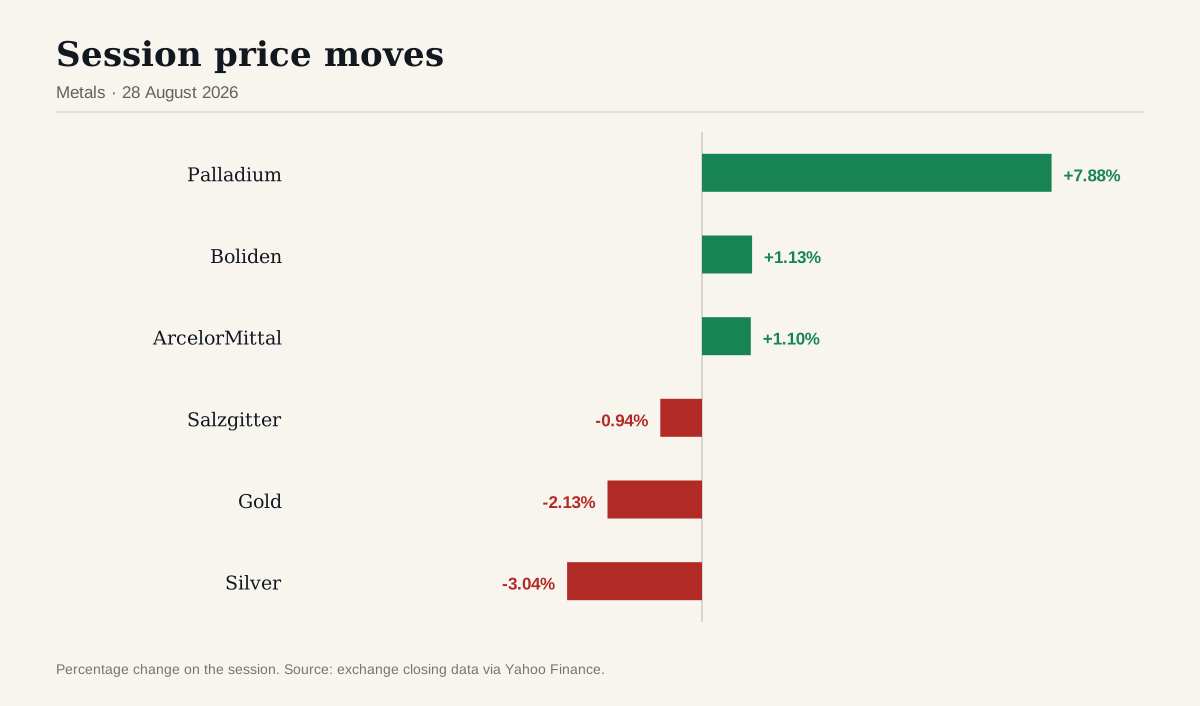
Palladium (PA=F) closed at USD 1,443 on 28 August 2026, up 7.88% on the day and 7.01% over the past five sessions. The metal's price is a direct input cost for European carmakers that rely on palladium‑rich catalytic converters to meet emissions standards. A rise of this magnitude tightens cost calculations for new model launches and for the ongoing electrification of vehicle fleets.
- Palladium price: USD 1,443, +7.88% day
- Silver price: USD 67.32, 3.04% day
- Gold price: USD 4,511.70, 2.13% day
- US dollar index: 99.706, +0.55% day
- Boliden share price: SEK 573.2, +1.13% day
metal price movements and their industrial relevance
| Instrument | Close | Day | 5-day | Volume vs avg |
|---|---|---|---|---|
| Palladium USD | 1,443 | +7.88% | +7.01% | 2,421.4x |
| Boliden SEK | 573.2 | +1.13% | +1.34% | 0.96x |
| ArcelorMittal EUR | 64.6 | +1.10% | +3.23% | 0.88x |
| Salzgitter EUR | 57.85 | -0.94% | +9.67% | 0.8x |
| Gold USD | 4,511.7 | -2.13% | -2.43% | 255.72x |
| Silver USD | 67.32 | -3.04% | -3.09% | 1,280.71x |
| Source: exchange closing data via Yahoo Finance, session of 2026-08-28. | ||||
The session's most pronounced move was the palladium rally. Palladium is a critical component of three‑way catalytic converters, which treat exhaust gases from gasoline engines. European manufacturers that source the metal from global markets now face a higher per‑unit expense. The increase also reverberates through the supply chain of specialised alloy producers that sell palladium‑based products to the automotive sector.
Silver (SI=F) fell 3.04% to USD 67.32. Silver is widely used in printed‑circuit boards, photovoltaic cells and high‑frequency electronics. A lower price eases the material cost for European electronics assemblers and for solar‑panel manufacturers that incorporate silver paste in cell production. The decline, however, follows a month‑long rise of 14.46%, indicating that the recent dip may be a short‑term correction rather than a sustained trend.
Gold (GC=F) slipped 2.13% to USD 4,511.70. While gold's primary role is as a store of value, it also finds niche use in high‑precision electronics and as a financial hedge for European firms with large cash balances. The price movement is modest compared with the longer‑term 10.04% gain over the past month, suggesting that the metal's valuation remains relatively stable for corporate treasuries.
The US dollar index (DX‑Y.NYB) closed at 99.706, up 0.55% on the day. A stronger dollar typically exerts downward pressure on dollar‑priced commodities, yet palladium rose sharply despite the dollar's gain. This divergence hints at market dynamics specific to the metal rather than a pure currency effect.
listed european metal producers: margin signals
Boliden (BOL.ST) ended the session at SEK 573.2, up 1.13% on the day and 1.34% over the previous five sessions. The Swedish miner's share price movement follows its announcement to acquire a 64.7% stake in Nexa Resources. The transaction, while not quantified in the data, signals a strategic expansion into copper and zinc assets, potentially diversifying Boliden's revenue base and smoothing exposure to palladium price swings.
ArcelorMittal (MT.AS) closed at EUR 64.6, a 1.10% gain. The steelmaker's modest rise mirrors a broader 8.39% increase in its share price over the past month. Steel production consumes significant quantities of iron ore and coal, but the company's margin is also sensitive to the cost of alloying elements, including nickel and, indirectly, palladium used in specialised steel grades. The price rise in palladium could compress margins on high‑grade steel products unless offset by higher steel selling prices.
Salzgitter (SZG.DE) fell to EUR 57.85, down 0.94% on the day after a 9.67% gain over the previous five sessions. The German steel producer's share price decline occurs despite a month‑long 12.55% rise, suggesting that recent palladium‑related cost pressures may be weighing on investor sentiment. Salzgitter's product mix includes steel for automotive chassis, a segment that also feels the impact of higher palladium input costs.
what the moves mean for european industrial cost structures
Automotive manufacturers that source palladium for catalytic converters will see an immediate increase in material expense. Assuming a linear pass‑through, a 7.88% rise in palladium price could add several euros per vehicle, depending on the amount of palladium used per unit. Companies that have hedged their exposure may mitigate the impact, but the data does not indicate the extent of hedging across the sector.
Electronics assemblers and solar‑panel producers benefit from the 3.04% dip in silver. For a typical photovoltaic cell that uses a few grams of silver, the price reduction translates into a marginal cost saving per megawatt of capacity. Over the scale of European solar‑panel installations, the aggregate effect could be measurable, especially for firms that operate on thin margins.
Gold's modest decline offers limited direct cost relief, but it does affect the valuation of corporate cash holdings. European firms that hold gold as a treasury asset may see a slight reduction in the market value of those holdings, though the overall impact on balance sheets is likely minor given the size of most corporate cash positions.
Listed producers showed mixed results, reflecting different levels of exposure to metal price volatility. Boliden's acquisition move may insulate it from palladium price swings by expanding into copper and zinc, metals with different demand drivers. ArcelorMittal's modest gain suggests that its broader steel pricing may be keeping pace with rising alloy costs, while Salzgitter's dip hints at margin pressure on its automotive‑grade steel lines.
Overall, the session illustrates how a single commodity's price shock can ripple through multiple European industries. Companies that rely heavily on palladium will need to reassess cost structures, potentially accelerating efforts to substitute alternative catalyst materials or to lock in prices through longer‑term contracts. Those that benefit from lower silver prices may see a short‑term boost to profitability, especially in high‑volume electronics manufacturing.
session snapshot
The market breadth was eight up and six down across the fourteen metal‑related equities that traded. The US dollar index closed at 99.706, 2.1% below its 52‑week high of 101.8, indicating that the dollar remains within a relatively narrow band despite the day's modest appreciation.
All figures are taken from the 28 August 2026 session data. The next scheduled release of European industrial production statistics is due on 15 September 2026, which may provide further context for how these metal price movements translate into real‑world cost adjustments.
Boliden · three-month price
Chart: TradingView. Live prices may differ from the closing figures quoted above.