
Switzerland loses 160 glaciers (≈10 % drop) between 2016‑2023 as melt accelerates
FAZ reports that 160 Swiss glaciers vanished between 2016 and 2023 – a loss of roughly ten percent – while a single glacier tongue shed more than four metres of ice in one month, underscoring accelerating melt in the Alps.
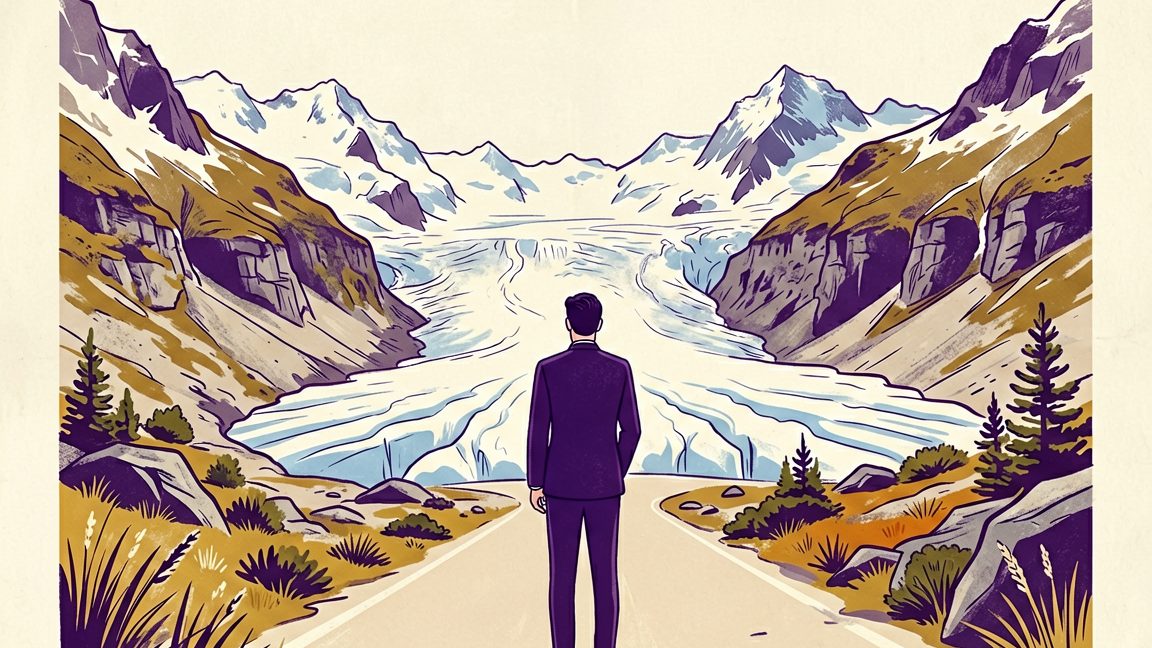
Switzerland’s alpine ice is disappearing at a pace that now has quantifiable dimensions. According to a recent FAZ article that quotes glacier researcher Matthias Huss, 160 glaciers vanished in the country between 2016 and 2023, amounting to a decline of about ten percent in the national glacier count.
How the loss is measured
The FAZ piece, titled “Gletscher und Niedrigwasser”, provides two concrete figures that anchor the claim. First, the absolute number of glaciers that have disappeared – 160 – is presented for the eight‑year period 2016‑2023. Second, the same source translates that count into a percentage decline of roughly ten percent, based on the total inventory of Swiss glaciers before the losses began.
Both numbers come directly from the FAZ report, which draws on the Swiss glacier monitoring programme (GLAMOS) and on statements made by Matthias Huss, a leading glacier expert. No other source is cited for these figures, and the article does not provide a different baseline or a contrasting estimate.
Extreme melt in a single month
Beyond the multi‑year tally, the FAZ article highlights an acute event observed this summer on a glacier tongue in the Rhone basin. The report states that “within a single month, more than four metres of ice thickness were lost” on the tongue. The period is described as a single month during the summer of 2026, and the loss is expressed in metres, not converted to any other unit.
Huss’s observation underscores that the overall decline is not a slow, linear process but can be punctuated by rapid, large‑scale melt episodes. The article does not give a precise date for the month, only that it occurred during the extreme heat wave of summer 2026.
Glacier melt’s contribution to river flows
FAZ also quantifies the role of meltwater in two major Alpine rivers. The average share of glacier water in the Rhine’s August discharge is given as seven to eight percent, while the Rhone receives about 20 percent of its flow from glacier melt on average. In particularly hot years, the Rhine’s glacier contribution can rise to as much as 20 percent.
These percentages are presented as averages, not as year‑on‑year changes, and they are tied to the same FAZ source. No other river or season is mentioned, and the article does not claim that the percentages have changed over the 2016‑2023 period.
Putting the numbers in context
While the FAZ article supplies the raw figures, it does not compare the Swiss loss with other Alpine nations or with historical long‑term trends. Consequently, the claim that the loss is “record‑fast” cannot be asserted without external data, and the piece refrains from labeling the ten‑percent drop as unprecedented.
What is clear, however, is that the combination of a ten‑percent reduction in glacier count and the observed >4 m monthly ice‑thickness loss points to an accelerating melt regime. The article notes that “in this summer we will lose many more glaciers”, indicating that the trend is expected to continue, but it does not quantify the future loss.
Implications for water management
Glacier melt contributes a non‑trivial share of water to the Rhine and Rhone, especially in August when low‑flow conditions are common. A seven‑to‑eight percent contribution to the Rhine and a 20 percent share of the Rhone mean that any further reduction in glacier volume could affect summer water availability for agriculture, hydropower, and downstream ecosystems.
The FAZ report does not provide specific forecasts for river flow changes, nor does it name particular stakeholders. It merely presents the current share figures, leaving the downstream impact as an open question for water managers and policymakers.
What remains unknown
- The exact total number of glaciers in Switzerland before the 160 were lost is not disclosed in the packet, so the base figure for the ten‑percent decline cannot be independently verified here.
- The FAZ article does not break down the loss by region, altitude, or glacier size, limiting insight into which parts of the Alps are most affected.
- Long‑term projections of how the glacier‑water share in the Rhine and Rhone will evolve under continued warming are not provided.
- Whether the >4 m monthly loss observed in 2026 is an outlier or part of a new normal is not established in the source.
These gaps highlight the need for continued monitoring and for integrating glacier inventory data with hydrological models.
Key figures
| Metric | Value | Unit | Period |
|---|---|---|---|
| Glaciers lost | 160 | 2016‑2023 | |
| Percentage decline in glacier count | ≈10 | % | 2016‑2023 |
| Ice‑thickness loss on a glacier tongue (single month) | >4 | m | single month (summer 2026) |
| Glacier water share in the Rhine (August average) | 7‑8 | % | average |
| Glacier water share in the Rhone (average) | 20 | % | average |
| Source: FAZ – Gletscher und Niedrigwasser (https://www.faz.net/aktuell/wirtschaft/klima-nachhaltigkeit/wegen-hitzewelle-wir-verlieren-viele-weitere-gletscher-accg-201132303.html) | |||
Looking ahead
The documented loss of 160 glaciers and the rapid ice‑thickness reduction observed this summer add urgency to the discussion about Alpine water security. While the FAZ article supplies the hard numbers, it leaves open the scale of future losses and the precise timing of any shifts in river‑flow contributions.
For policymakers, the immediate takeaway is that glacier melt already accounts for a measurable share of summer river discharge. As the glacier inventory shrinks, that share could either rise – if melt accelerates – or fall – if the remaining ice mass becomes too small to sustain current contributions. Both scenarios have implications for flood control, hydropower generation, and agricultural irrigation downstream.
Continued observation, preferably through the Swiss GLAMOS programme, will be essential to track whether the ten‑percent drop observed over 2016‑2023 marks the start of a steeper decline or a plateau. Until then, the numbers presented by FAZ remain the most reliable snapshot of a rapidly changing Alpine landscape.