
corn spikes while gasoline slumps in a mixed energy‑commodities session
Corn futures jumped almost 5 per cent as European buyers watch a weaker euro, while gasoline fell over 12 per cent. The moves reverberate through food, transport and energy costs across the continent.
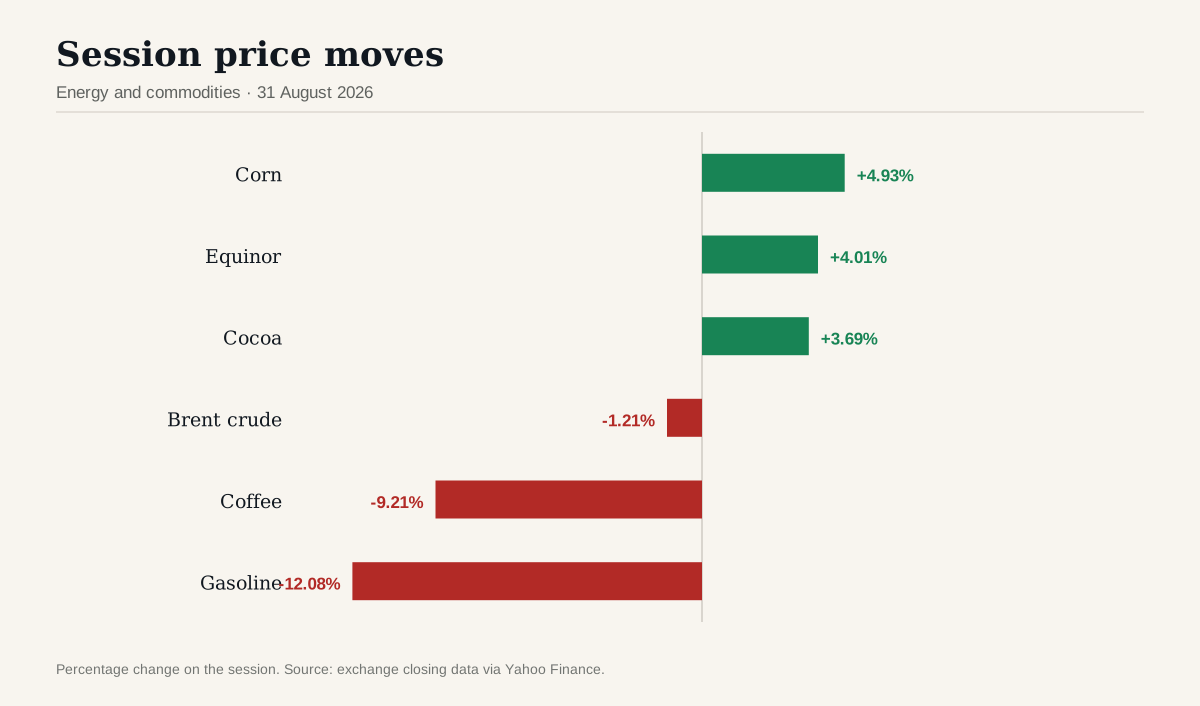
On 31 August 2026 the most active contract was Corn (ZC=F, CBOT), which closed at US$ 537.25, up 4.93 per cent from the previous close of US$ 512. The price surge was the largest single‑day gain among the 18 energy and commodity contracts that traded, and it came as the euro slipped against the dollar.
- Euro/USD closed at 1.162, down 0.31 per cent on the day.
- Corn settled at US$ 537.25, up 4.93 per cent.
- Brent crude finished at US$ 88.23, down 1.21 per cent.
- Gasoline fell to US$ 3.0682, down 12.08 per cent.
- Equinor shares closed at NOK 399.4, up 4.01 per cent.
energy contracts move in opposite directions
| Instrument | Close | Day | 5-day | Volume vs avg |
|---|---|---|---|---|
| Corn USX | 537.25 | +4.93% | +9.31% | 1.67x |
| Equinor NOK | 399.4 | +4.01% | +0.08% | 2.43x |
| Cocoa USD | 6,768 | +3.69% | +16.29% | 1.64x |
| Brent crude USD | 88.23 | -1.21% | -4.27% | 0.78x |
| Coffee USX | 314 | -9.21% | -16.88% | 1.08x |
| Gasoline USD | 3.07 | -12.08% | -6.19% | 0.73x |
| Source: exchange closing data via Yahoo Finance, session of 2026-08-31. | ||||
The session saw a clear split between refined‑product fuels and the broader energy market. Brent crude (BZ=F, NY Mercantile) slipped to US$ 88.23, a decline of 1.21 per cent from the previous close of US$ 89.31. The 52‑week range for Brent runs from US$ 58.72 to US$ 126.10, leaving the contract 30.0 per cent below its annual high.
At the other end of the fuel spectrum, Gasoline (RB=F, NY Mercantile) experienced a far sharper correction, closing at US$ 3.0682, down 12.08 per cent from US$ 3.4899. The 52‑week high for gasoline sits at US$ 3.8232, meaning the contract is now 19.7 per cent below that level. Volume for gasoline was 0.73 times the 20‑day average, indicating lighter trading activity despite the price move.
Both Brent and gasoline are priced in dollars, so European importers must convert euros to meet the invoice currency. The euro's 0.31 per cent depreciation against the dollar marginally offsets the price declines for these fuels, but the net effect depends on the size of each firm's exposure and the timing of cash‑flow conversion.
agricultural contracts react to demand signals
Beyond corn, two other soft commodities posted sizeable moves. Cocoa (CC=F, ICE Futures) rose to US$ 6,768, up 3.69 per cent from US$ 6,527. The 52‑week range for cocoa stretches from US$ 2,798 to US$ 7,644, leaving the contract 11.5 per cent below its annual high.
In contrast, Coffee (KC=F, ICE Futures) fell to US$ 314, a drop of 9.21 per cent from US$ 345.85. The 52‑week high for coffee is US$ 437.95, putting the contract 28.3 per cent below that peak. Volume for coffee was 1.08 times the 20‑day average, suggesting modestly higher trading interest than usual.
The three agricultural contracts together illustrate divergent price pressures. Corn's 4.93 per cent rise pushes the 52‑week high of US$ 542 to within 0.9 per cent, signalling a market that is near its annual peak. Cocoa, while higher, still lags its high by a double‑digit margin, and coffee is firmly in the lower third of its range.
listed majors and utilities in focus
Among the 18 companies that traded, Equinor (EQNR.OL, Oslo) was the standout equity, closing at NOK 399.4, up 4.01 per cent from the prior close of NOK 384. The share price sits 5.4 per cent below its 52‑week high of NOK 422.3, and trading volume was 2.43 times the 20‑day average, indicating strong investor interest.
No other listed energy majors or utilities were mentioned in the session data, and no corporate announcements accompanied the price moves. The equity rise therefore reflects market reaction to the broader commodity environment rather than a specific corporate development.
what the moves mean for european costs
For European manufacturers, the price trajectory of corn is a direct input cost factor. Corn is a key feedstock for food processors, animal‑feed producers and bio‑ethanol plants. A 4.93 per cent rise in the futures price translates into higher procurement costs for any firm that sources the grain on the spot market or through forward contracts linked to the CBOT price. Companies that have hedged at lower levels will see the benefit of those contracts, while unhedged players face an immediate margin squeeze.
Chocolate makers and confectionery brands will watch cocoa's 3.69 per cent increase with concern. Although the price is still 11.5 per cent below the 52‑week high, the upward move adds to the cost base for products that rely on cocoa beans. The impact on final‑goods pricing will depend on the proportion of cocoa in the product mix and the ability of firms to pass the cost through to consumers.
Conversely, coffee's 9.21 per cent decline eases input costs for coffee roasters and retailers across Europe. The lower futures price can improve gross margins, especially for companies that have not locked in prices through futures contracts. However, the steep drop also raises questions about demand dynamics, which could affect sales volumes.
On the fuel side, the modest 1.21 per cent fall in Brent crude offers limited relief to transport and logistics firms that purchase diesel or jet fuel priced off the Brent benchmark. The larger 12.08 per cent slide in gasoline, while significant, primarily affects the retail gasoline market and the cost of light‑duty vehicle fuel. For European freight operators that rely more on diesel, the impact is indirect, but the euro's 0.31 per cent weakening against the dollar partially offsets the dollar‑denominated price decline.
Energy‑intensive industries such as chemicals, steel and cement will monitor the combined effect of fuel price moves and the euro's exchange‑rate shift. A weaker euro raises the euro‑cost of imported crude and refined products, while lower Brent and gasoline prices reduce the headline cost of fuel. The net result will vary by firm, depending on the mix of hedges, the timing of purchases and the proportion of costs that are dollar‑denominated.
Equinor's share price gain suggests investor optimism about the company's exposure to the current commodity environment. As a major upstream and downstream player, Equinor benefits from higher oil prices relative to its cost base, but the modest Brent decline may temper that upside. The equity rally could also reflect expectations of stronger cash flow from the company's diversified portfolio, including its gas and renewable assets, although no specific guidance was disclosed.
Overall, the session shows the intertwined nature of commodity pricing and currency movements for European businesses. A weaker euro can erode the benefit of lower dollar‑priced fuels, while sharp moves in agricultural futures directly affect food‑related margins. Companies that have robust hedging programmes will be better positioned to manage the volatility, whereas those that rely on spot purchases may see their cost structures shift noticeably within a single trading day.
The euro closed at 1.162 USD, 0.31 per cent lower than the previous close, and the session's price data reflect the latest snapshot of input‑cost pressures facing European industry.
Equinor · three-month price
Chart: TradingView. Live prices may differ from the closing figures quoted above.