
Corn and sugar surge lift European food costs as coffee plummets
Agricultural commodity prices drive input cost pressures for food manufacturers, while gas prices add to industrial margin risks.
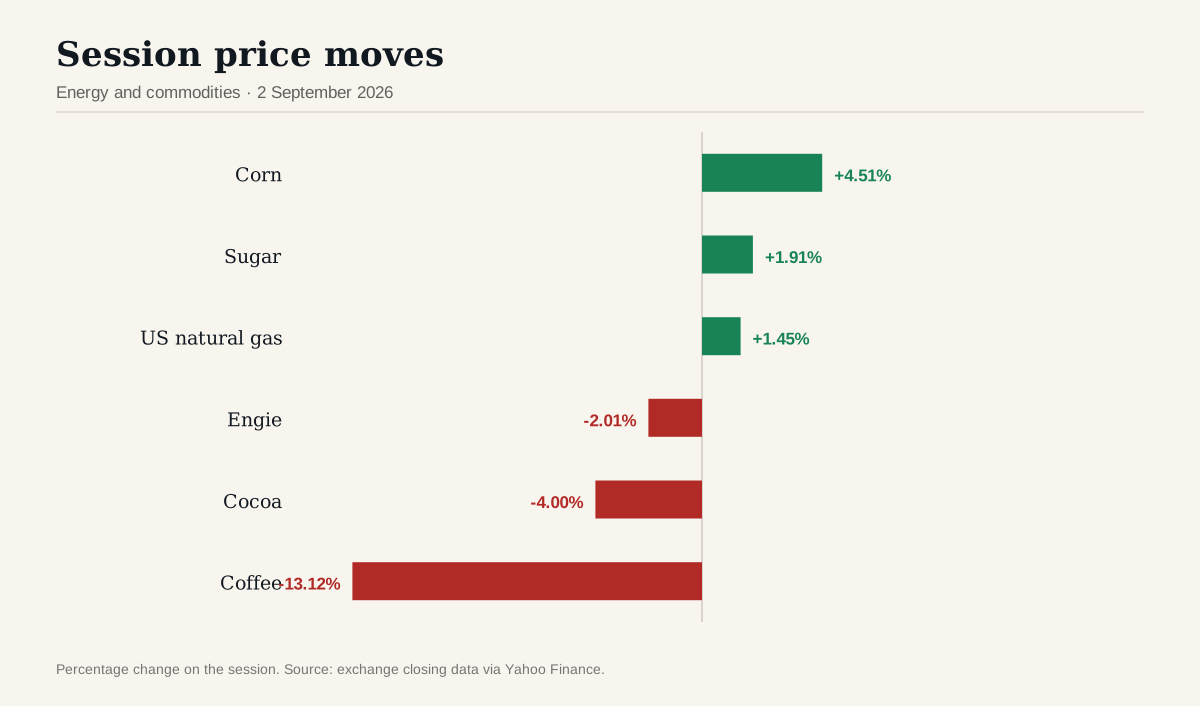
Corn futures surged 4.51% on 2026-09-02, extending a month-long rally that has lifted prices 23.23% since early August, as global supply concerns continued to pressure agricultural markets. The move, which pushed corn to USX 545, within 0.9% of its 52-week high, shows rising input costs for European food manufacturers and retailers, who face mounting pressure to pass on higher expenses to consumers. Meanwhile, sugar futures rose 1.91% to USX 18.71, up 24.40% over the past month, and coffee plummeted 13.12% to USX 297.35, though it remains 32.1% below its 52-week peak. These swings, paired with a slight decline in the euro, are reshaping cost structures across European industries.
- Corn (CBOT) closed at USX 545, up 4.51% on the day and 23.23% over the past month, now 0.9% below its 52-week high.
- Sugar (ICE Futures) rose 1.91% to USX 18.71, gaining 24.40% in a month, 0.3% below its 52-week high.
- Coffee (ICE Futures) plummeted 13.12% to USX 297.35, down 16.85% over five days but 32.1% below its 52-week peak.
- The euro closed at USD 1.1592, down 0.22% on the day and 3.6% below its 52-week high.
- US natural gas (NYMEX) gained 1.45% to USD 2.946, up 9.84% over the past month.
Agricultural commodities: Corn and sugar drive food cost risks
| Instrument | Close | Day | 5-day | Volume vs avg |
|---|---|---|---|---|
| Corn USX | 545 | +4.51% | +6.03% | 2.11x |
| Sugar USX | 18.71 | +1.91% | +6.37% | 1.06x |
| US natural gas USD | 2.95 | +1.45% | +3.66% | 0.71x |
| Engie EUR | 23.91 | -2.01% | -4.21% | 1.3x |
| Cocoa USD | 6,290 | -4.00% | +8.13% | 2.22x |
| Coffee USX | 297.35 | -13.12% | -16.85% | 2.63x |
| Source: exchange closing data via Yahoo Finance, session of 2026-09-02. | ||||
Corn's rally, the sharpest among major commodities on the day, has been fueled by persistent supply concerns, with reports linking the surge to potential impacts on grocery bills. For European businesses, the implications are direct: corn is a key input for animal feed, cereals, and processed foods. A 23.23% monthly increase in corn prices translates to higher costs for meat producers, dairy farmers, and snack manufacturers, who must either absorb the expense, squeezing margins, or raise prices for consumers. With corn now near its 52-week high of USX 549.75, the risk of sustained inflation in food prices into 2027 is growing.
Sugar's 24.40% monthly gain, driven by reports of a global deficit, adds to the pressure. European confectioners, beverage makers, and bakeries rely on sugar as a core ingredient, and the price rise comes as many are still recovering from earlier inflationary shocks. The International Sugar Organization (ISO) has projected a global deficit, a factor cited in multiple reports, which suggests the rally may not reverse soon. For retailers, this means negotiating with suppliers over price increases or facing reduced profit margins on sugar-based products.
Coffee's 13.12% daily drop offers a rare reprieve, though it follows a period of sharp gains. Prices remain 32.1% below their 52-week high of USX 437.95, but the decline could ease cost pressures for European roasters and cafes. However, the drop may be temporary: previous reports have linked coffee price surges to Brazil's troubled harvests, and supply constraints could reemerge. For now, the move provides some breathing room, but businesses are unlikely to see significant margin improvements until prices stabilize at lower levels.
Energy: US natural gas rises as European markets face tight supply
US natural gas futures gained 1.45% to USD 2.946, up 9.84% over the past month, amid reports of rising global demand. While US prices remain 62.4% below their 52-week high, European gas markets are under greater stress: reports note European gas prices have hit a three-year high, with winter storage at a 13-year low and UK reserves the lowest in Europe. For European businesses, this is critical: natural gas is a key input for chemicals, fertilizers, and power generation.
Chemical producers, which use gas as a feedstock, face higher production costs, which could lead to price increases for plastics, paints, and other materials. Fertilizer manufacturers, already grappling with margin squeezes, highlighted in ASTARTA Holding NV's H1 2026 earnings call, will see further pressure, potentially reducing supply and raising prices for farmers. Power generators, especially those relying on gas, may pass on higher costs to industrial and residential users, adding to overall inflationary pressures.
The euro's decline, closing at USD 1.1592, down 0.22% on the day, amplifies these costs. Since most commodities are priced in dollars, a weaker euro increases the cost of imports for European buyers. For gas, this means the effective cost increase is steeper than the dollar-denominated price move alone, further squeezing margins for energy-intensive businesses.
European majors: Engie slips amid broader market shifts
Among European energy companies, Engie (ENGI.PA) was the top faller, closing at EUR 23.91, down 2.01% on the day and 10.85% over the past month. The drop came with no specific company announcement, though the session saw mixed moves in energy stocks: a sector update noted energy stocks were higher in afternoon trading, but Engie bucked the trend. The company, a major player in European utilities, has seen its share price decline 20.0% from its 52-week high of EUR 29.89, reflecting broader market sentiment toward utility stocks amid volatile energy prices.
Engie's performance contrasts with the rise in gas prices, which might typically benefit energy producers. However, utilities face unique pressures: while higher gas prices can boost revenue from power generation, they also increase costs for retail supply contracts, where prices may be fixed or regulated. The 10.85% monthly drop in Engie's share price suggests investors are concerned about the company's ability to balance these conflicting factors, though without further details, the exact drivers remain unclear.
What it means for European business: Margin pressures and inflation risks
For European businesses, the day's commodity moves translate to a mix of margin risks and, in coffee's case, limited relief. Food manufacturers and retailers are the most directly affected: corn and sugar price surges will test their ability to pass on costs to consumers, who are already grappling with high inflation. If they fail to do so, margins will shrink; if they succeed, consumer spending may slow, impacting overall sales.
Industrial sectors, particularly chemicals, fertilizers, and power, face sustained cost pressures from rising gas prices. These industries are critical to European supply chains, and higher input costs could lead to reduced production, delays, or price increases for downstream products. For example, a fertilizer manufacturer facing higher gas costs may cut output, leading to higher prices for farmers, which in turn raises costs for food producers, a ripple effect that could prolong inflation.
The euro's weakness adds another layer of complexity. European businesses importing commodities must pay more in euro terms, even if dollar-denominated prices stabilize. This currency effect could offset any benefits from lower coffee prices or moderate gas price increases, keeping overall input costs elevated.
Corn futures closed just 0.9% below their 52-week high on 2026-09-02, a level that, if breached, could signal further gains. For European food manufacturers and retailers, this means preparing for sustained cost pressures, and for consumers, the prospect of higher grocery bills well into next year.
Engie · three-month price
Chart: TradingView. Live prices may differ from the closing figures quoted above.