
Palladium leads precious metals higher as European producers diverge
Precious metals surge on heavy volume while Nordic and German miners slip, widening the gap between input costs and producer margins
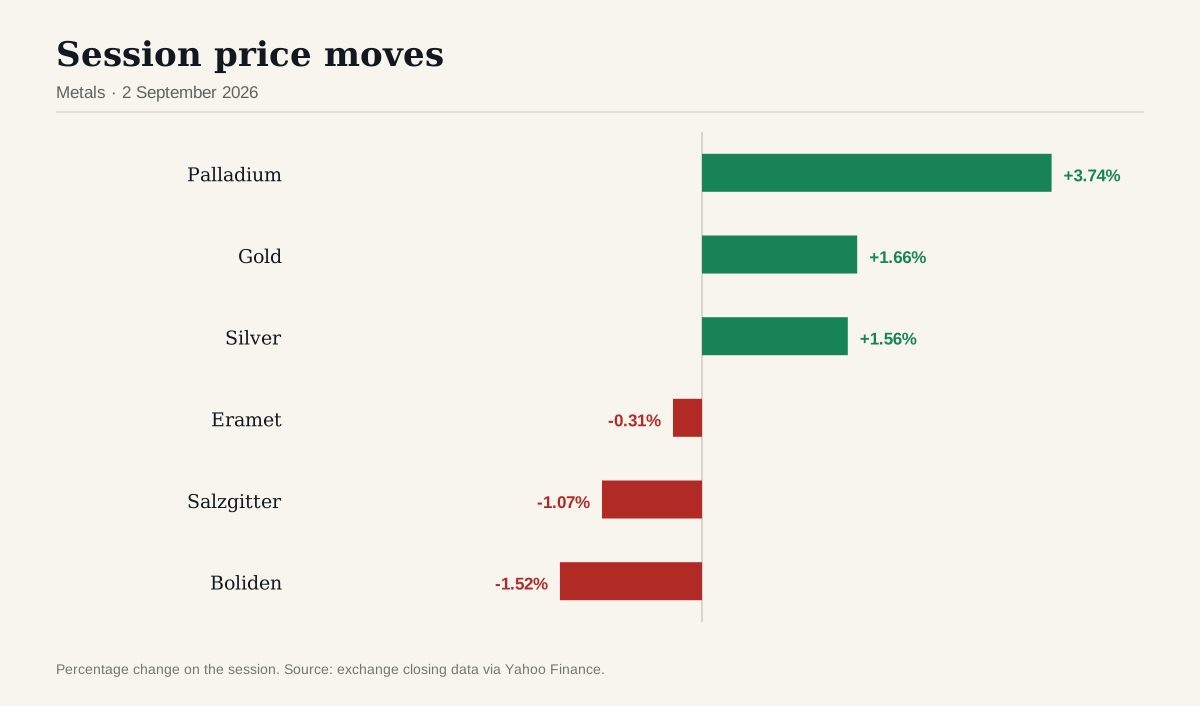
Palladium jumped 3.74 per cent to USD 1,366.50 an ounce on the New York Mercantile Exchange, the largest single-session move across the metals complex on 2 September, while gold and silver also advanced on volume multiples that far exceeded their 20-day averages. The rally in dollar-denominated precious metals coincided with a weaker US dollar index, which slipped 0.09 per cent to 99.584, yet the three biggest European-listed miners in the screen, Boliden, Salzgitter and Eramet, all closed lower, underscoring a growing disconnect between underlying commodity prices and the equity valuations of the companies that produce them.
- Palladium: USD 1,366.50, +3.74% day, volume 10.87x 20-day average, 37.0% below 52-week high
- Gold: USD 4,420.20, +1.66% day, volume 143.42x 20-day average, 20.9% below 52-week high
- Silver: USD 65.625, +1.56% day, volume 23.46x 20-day average, 45.9% below 52-week high
- US dollar index: 99.584, -0.09% day, 2.2% below 52-week high
- Boliden: SEK 542.80, -1.52% day, 25.4% below 52-week high
Precious metals rally on exceptional volume
| Instrument | Close | Day | 5-day | Volume vs avg |
|---|---|---|---|---|
| Palladium USD | 1,366.5 | +3.74% | +3.12% | 10.87x |
| Gold USD | 4,420.2 | +1.66% | -3.87% | 143.42x |
| Silver USD | 65.63 | +1.56% | -3.48% | 23.46x |
| Eramet EUR | 44.88 | -0.31% | +0.22% | 0.55x |
| Salzgitter EUR | 55.65 | -1.07% | -4.30% | 0.92x |
| Boliden SEK | 542.8 | -1.52% | -6.96% | 1.06x |
| Source: exchange closing data via Yahoo Finance, session of 2026-09-02. | ||||
Palladium's advance to USD 1,366.50 represents a recovery from a 52-week low of USD 1,111.60, though the metal remains 37.0 per cent below its 52-week peak of USD 2,169.90. The session's volume printed at 10.87 times the 20-day average, the highest multiple among the three precious metals gainers. Reported headlines referenced exchange-traded fund flow analysis for August and a stakeholder confirmation of broad copper-nickel-cobalt-platinum group element mineralisation through a 498-metre discovery hole at the Loki project, though no specific corporate announcement was tied to the palladium futures move itself.
Gold rose 1.66 per cent to USD 4,420.20, a level that sits 20.9 per cent below its 52-week high of USD 5,586.20. The volume surge was extraordinary: 143.42 times the 20-day average, the highest multiple in the entire dataset. The reported headlines cluster around seasonal equity market patterns, Newmont's 34.5 per cent share price gain in August, a note on an unexpected problem facing gold investors, drilling results from Scorpio Gold at the Goldwedge project intersecting 3.02 grams per tonne over 48.92 metres, and analyst questions on AngloGold Ashanti's second-half EBITDA trajectory and Barrick's second-quarter production outlook. None of these items constitutes a single market-moving catalyst; the volume spike suggests broad-based repositioning rather than a reaction to a specific development.
Silver gained 1.56 per cent to USD 65.625, 45.9 per cent below its 52-week high of USD 121.30. Volume ran at 23.46 times the 20-day average. Reported headlines highlighted a TSX miners rally led by precious metals stocks, speculation on whether Antamina will boost Wheaton Precious Metals' production, the sixth consecutive year of structural silver deficit, and drilling updates from Mercado Minerals at the Zamora project, Magma Silver at Niñobamba in Peru, and Kuya Silver at Umm Hadid. The deficit narrative, if sustained, implies ongoing industrial demand that outpaces mine supply, a dynamic relevant to European electronics and solar manufacturing supply chains.
Dollar backdrop and base metal context
The US dollar index closed at 99.584, down 0.09 per cent on the day but up 0.67 per cent over five days and down 0.38 per cent over one month. The index sits 2.2 per cent below its 52-week high of 101.80. A weaker dollar typically supports dollar-denominated commodities, and the precious metals complex moved in line with that relationship. No base metal futures appeared among the top three risers or fallers in the supplied screen, leaving copper, aluminium, zinc and nickel price action unreported for this session. The palladium headlines referenced copper-nickel-cobalt-PGE mineralisation, linking the platinum group metal to the battery metals suite that drives European gigafactory and grid investment planning.
European producers slip despite metal tailwinds
Boliden, listed in Stockholm, fell 1.52 per cent to SEK 542.80 on volume of 1.06 times its 20-day average. The shares have declined 6.96 per cent over five days but are up 8.60 per cent over one month. The stock trades 25.4 per cent below its 52-week high of SEK 727.80. No reported headline accompanied the move. The divergence, precious metals higher, Boliden lower, suggests equity investors are pricing factors beyond the spot metal price: currency translation effects (the Swedish krona versus the US dollar), cost inflation in Nordic mining operations, or forward curve positioning that does not align with spot strength.
Salzgitter, the German steel producer listed on XETRA, dropped 1.07 per cent to EUR 55.65 on volume of 0.92 times the 20-day average. The five-day change is -4.30 per cent, while the one-month change is +1.27 per cent. The shares sit 17.7 per cent below their 52-week high of EUR 67.60. No reported headline accompanied the move. Steel pricing is not captured in the precious metals screen, but the decline in Salzgitter while gold and silver rally highlights the sector-specific nature of current cost pressures: European steelmakers face high energy costs, carbon allowance expenses, and import competition that are not directly alleviated by higher precious metals prices.
Eramet, listed in Paris, edged down 0.31 per cent to EUR 44.88 on thin volume of 0.55 times the 20-day average. The five-day change is +0.22 per cent, the one-month change -3.11 per cent. The stock is 49.1 per cent below its 52-week high of EUR 88.20, the deepest discount to peak among the three fallers. No reported headline accompanied the move. Eramet's exposure to manganese and nickel places it closer to the battery metals theme referenced in the palladium headlines, yet the share price has not captured the precious metals bid.
Industrial cost implications for European sectors
The palladium move is the most directly relevant to European industrial cost structures. Palladium is a primary component in gasoline vehicle catalytic converters, and the 3.74 per cent single-day increase raises the bill of materials for every internal combustion and hybrid vehicle produced in Europe. With the metal still 37 per cent below its 52-week high, the absolute cost remains below the peak levels seen in prior supply crunches, but the velocity of the move, on 10.87 times average volume, signals tightening physical availability or speculative positioning that could feed through to contract pricing for autocatalyst fabricators supplying Volkswagen, Stellantis and BMW.
Gold's rise to USD 4,420.20, while 20.9 per cent off its high, reinforces the asset's role as a portfolio hedge rather than an industrial input. The 143-times volume multiple suggests institutional reallocation, potentially driven by real yield expectations or currency reserve diversification. For European corporates, a higher gold price does not directly affect operating costs but may signal treasury departments to reassess hedging programmes for dollar-denominated commodity purchases.
Silver's advance to USD 65.625, amid reported commentary on a sixth consecutive year of structural deficit, has more tangible industrial consequences. Silver demand from photovoltaic manufacturing, electronics and automotive electronics continues to grow. European solar module assemblers and semiconductor packaging operations source silver in kilogramme quantities; a sustained price above USD 65 adds incremental cost to bill-of-materials calculations for Infineon, STMicroelectronics and module producers supplying the EU's 2030 solar deployment targets. The 45.9 per cent discount to the 52-week high of USD 121.30 provides historical context but does not offset the marginal cost increase for current procurement.
The divergence between rising precious metals and falling European mining equities creates a signalling problem for capital allocation. If Boliden, Salzgitter and Eramet cannot translate higher underlying commodity prices into share price performance, the cost of equity for new mine development or decarbonisation capex rises. That dynamic ultimately feeds through to long-term metal availability for European industry. The session closes with palladium at USD 1,366.50, gold at USD 4,420.20, silver at USD 65.625, and the three major European producers all in negative territory, a configuration that will be tested at the next round of quarterly production reports and cost guidance updates.
Boliden · three-month price
Chart: TradingView. Live prices may differ from the closing figures quoted above.