
Gold surges 3.7 per cent as precious metals diverge from copper's retreat
Gold and silver posted their sharpest sessions in weeks on extraordinary volume, while copper slipped and the dollar weakened, leaving European manufacturers with conflicting input-cost signals.
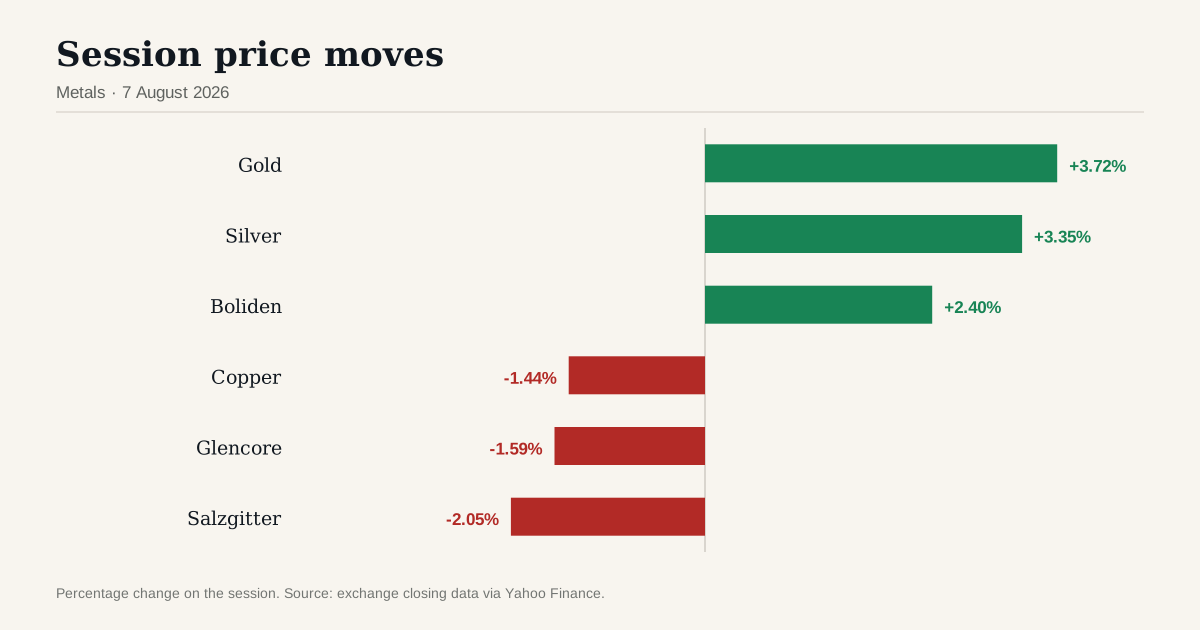
Gold closed at USD 4,399.70 on COMEX for the session of 7 August 2026, a gain of 3.72 per cent from the previous close of USD 4,242. Silver rose 3.35 per cent to USD 63.499. Copper moved in the opposite direction, falling 1.44 per cent to USD 6.591. The divergence between precious and industrial metals widened on a day when the US dollar index closed at 99.6, down 0.37 per cent, adding a currency dimension for any European buyer of dollar-denominated commodities.
- Gold: USD 4,399.70, +3.72 per cent on the day, +8.66 per cent over five days
- Silver: USD 63.499, +3.35 per cent on the day, volume 191.67 times the 20-day average
- Copper: USD 6.591, -1.44 per cent on the day, 2.6 per cent below its 52-week high
- US dollar index: 99.6, -0.37 per cent on the day, 2.2 per cent below its 52-week high
- Boliden: SEK 520.40, +2.40 per cent on the day, +9.81 per cent over five days
Precious metals surge on extraordinary volume
| Instrument | Close | Day | 5-day | Volume vs avg |
|---|---|---|---|---|
| Gold USD | 4,399.7 | +3.72% | +8.66% | 30.95x |
| Silver USD | 63.5 | +3.35% | +10.26% | 191.67x |
| Boliden SEK | 520.4 | +2.40% | +9.81% | 0.73x |
| Copper USD | 6.59 | -1.44% | +2.41% | 40.5x |
| Glencore GBp | 557 | -1.59% | +2.58% | 0.53x |
| Salzgitter EUR | 52.5 | -2.05% | +2.14% | 0.83x |
| Source: exchange closing data via Yahoo Finance, session of 2026-08-07. | ||||
Gold's 3.72 per cent rise was accompanied by volume at 30.95 times the 20-day average, a figure that points to a substantial repositioning rather than incremental trading. Over five sessions gold has gained 8.66 per cent, and over one month 6.51 per cent. The price remains 21.2 per cent below the 52-week high of USD 5,586.2, a distance large enough that the current move reverses only a portion of the earlier decline.
Silver's volume was even more striking at 191.67 times the 20-day average, a level that dwarfs ordinary daily turnover. Silver closed at USD 63.499, up 3.35 per cent on the day and 10.26 per cent over five days. The five-day gain exceeds gold's, but silver sits 47.7 per cent below its own 52-week high of USD 121.3, reflecting the sharper volatility that characterises the metal and the deeper sell-off it suffered from that peak.
The dollar's decline is a partial explanation. The US dollar index closed at 99.6, down 0.37 per cent on the day and 1.33 per cent over one month. A weaker dollar makes dollar-priced commodities cheaper for holders of other currencies, which can lift demand. But the scale of the precious-metals move, particularly the volume, suggests something beyond a currency effect. Reported headlines pointed to institutional interest returning: Citadel Securities' strategist Toni Rubner said it was time to start buying gold again, and one analysis described gold's move as a breakout that could force investors back in.
For European industry, gold matters less as an input than as a signal. Gold's rise alongside a softer dollar and heavy volume is consistent with increased demand for liquid stores of value. Whether that reflects concern about inflation, geopolitical risk, or expectations of monetary easing is not settled by the price alone. What is settled is the cost: any European electronics manufacturer using gold in connectors or circuit boards faces a spot price that has moved up more than 8 per cent in five sessions.
Copper slips from near its high
Copper closed at USD 6.591, down 1.44 per cent from the previous close of USD 6.687. The decline is modest in percentage terms, but the context matters. Copper is just 2.6 per cent below its 52-week high of USD 6.766, a level that represents the top of a range that has persisted for months. Volume was 40.5 times the 20-day average, another session of heavy turnover, though the direction was opposite to gold and silver.
Over five days copper has gained 2.41 per cent and over one month 6.05 per cent, so the longer trend remains upward even as the session turned negative. A reported headline asked whether copper's tariff-driven rally was running out of steam, which frames the recent gains as policy-linked rather than demand-led. If tariffs on copper imports into the United States have been supporting the price, any uncertainty about the scope or timing of those tariffs could produce exactly the sort of high-volume pullback seen in this session.
For European manufacturers, copper at USD 6.591 is the more consequential number than gold at USD 4,399.70. Copper is the input that runs through cable, construction, automotive wiring, grid infrastructure and renewable-energy equipment. A price 2.6 per cent below its 52-week high means input costs remain close to their highest level in a year. The 1.44 per cent single-day decline offers no real relief; it is a rounding error against a price that has climbed 6.05 per cent in a month.
The dollar factor for European buyers
The dollar index at 99.6, down 0.37 per cent on the day and 1.33 per cent over one month, compounds the cost pressure. European buyers of copper, gold and silver pay in their own currencies. A weaker dollar against the euro or sterling raises the local-currency price of the commodity even if the dollar price is flat, and amplifies the increase when the dollar price is rising. The dollar is currently 2.2 per cent below its 52-week high of 101.8, which means the currency has moved in a direction that raises the price of dollar-denominated commodities for euro-area purchasers over the past year.
European producers diverge from their metals
Boliden, the Swedish mining company listed in Stockholm, closed at SEK 520.40, up 2.40 per cent on the day and 9.81 per cent over five days. Boliden produces copper, zinc and other base metals, so a rising share price on a day when copper fell 1.44 per cent is a divergence worth noting. The most likely explanation is that Boliden's share price tracks a basket of metals rather than copper alone, and that zinc or other byproduct prices moved differently. It is also possible that the market is pricing in margin improvements from earlier cost discipline or production updates. No announcement specific to Boliden accompanied the move.
Boliden's volume was 0.73 times the 20-day average, well below normal turnover, which suggests the gain reflected a lack of selling pressure rather than an influx of new buyers. The shares are 28.5 per cent below the 52-week high of SEK 727.8, leaving considerable ground to recover even after the recent five-day rally.
Salzgitter, the German steelmaker listed on XETRA, fell 2.05 per cent to EUR 52.50. Steel prices are not in the metals futures covered here, but Salzgitter's decline on a day when the broader mining cohort was mixed aligns with the specific pressures on European steel producers: energy costs, competition from imports, and demand uncertainty in German construction and automotive. Salzgitter has gained 6.36 per cent over one month and 2.14 per cent over five days, so the session decline interrupts a period of modest recovery. Volume was 0.83 times the 20-day average. The shares are 22.3 per cent below the 52-week high of EUR 67.60.
Glencore, the diversified miner and commodity trader listed in London, closed at GBp 557, down 1.59 per cent. Glencore's business spans copper, cobalt, coal and oil, and its trading arm generates revenue from price volatility itself. A 1.59 per cent decline on a day when copper fell 1.44 per cent is a close alignment, though Glencore's exposure to thermal coal and oil means its shares rarely move in lockstep with any single metal. Volume was just 0.53 times the 20-day average, indicating very low participation. Glencore has risen 8.92 per cent over one month and 2.58 per cent over five days. The shares are 21.2 per cent below the 52-week high of GBp 707.2.
What the divergence means for European costs
The split between precious and industrial metals on this session creates a specific problem for European corporate planners. Gold and silver rising on heavy volume while copper slips suggests financial demand rather than industrial demand is driving the action. If copper were rising alongside gold, the signal would be broad commodity inflation reaching European factories. Instead, copper's decline, however small, points to either hesitation in industrial buying or profit-taking after a tariff-linked rally.
For a European cable manufacturer, the relevant input is copper at USD 6.591, still within 2.6 per cent of a 52-week high. For a German automotive group, the same copper price feeds into wiring harnesses and electric-motor components. For a utility building grid infrastructure, copper at these levels means project costs that have not materially eased despite the session's decline. The five-day gain of 2.41 per cent and one-month gain of 6.05 per cent confirm that the trend remains upward, whatever the single day's direction.
Gold's surge matters differently. European semiconductor and electronics companies that use gold in bonding wire and connectors face a spot price that has moved 8.66 per cent higher in five sessions. Jewellery retailers across the euro area face the same. Neither group can easily pass on a cost increase of that speed, which means margin compression unless they have hedged. The reported headlines on the gold side, including analysis that the move could force investors back in, suggest further upside pressure rather than a reversal, though price direction is never certain.
Silver's position is the most extreme in terms of volume and the most ambiguous in terms of industrial relevance. Silver is used in photovoltaic cells, automotive electronics and medical devices. A 10.26 per cent five-day gain at 191.67 times average volume is the sort of move that forces procurement teams to reassess forward purchasing. Yet silver remains 47.7 per cent below its 52-week high of USD 121.3, a reminder that the current rally follows a much deeper fall.
Breadth across the sector
Of the 13 companies in the metals universe that traded on this session, nine rose and four fell. The positive breadth is consistent with a risk-on day for mining equities, even though the largest industrial metal, copper, declined. The four fallers included Salzgitter and Glencore, both significant names in European metals. The nine risers were not individually detailed beyond Boliden, but the overall tilt suggests that equity investors in the sector were more responsive to the precious-metals rally and the weaker dollar than to copper's modest pullback.
Copper closed the session of 7 August 2026 at USD 6.591, which is 2.6 per cent below its 52-week high of USD 6.766.
Anglo American · three-month price
Chart: TradingView. Live prices may differ from the closing figures quoted above.