
Gold climbs to three‑month high while palladium and platinum retreat
Gold futures rose to a three‑month peak, lifting mining stocks Anglo American and Boliden, as palladium and platinum prices slipped, easing cost pressure on European auto makers but tightening margins for miners.
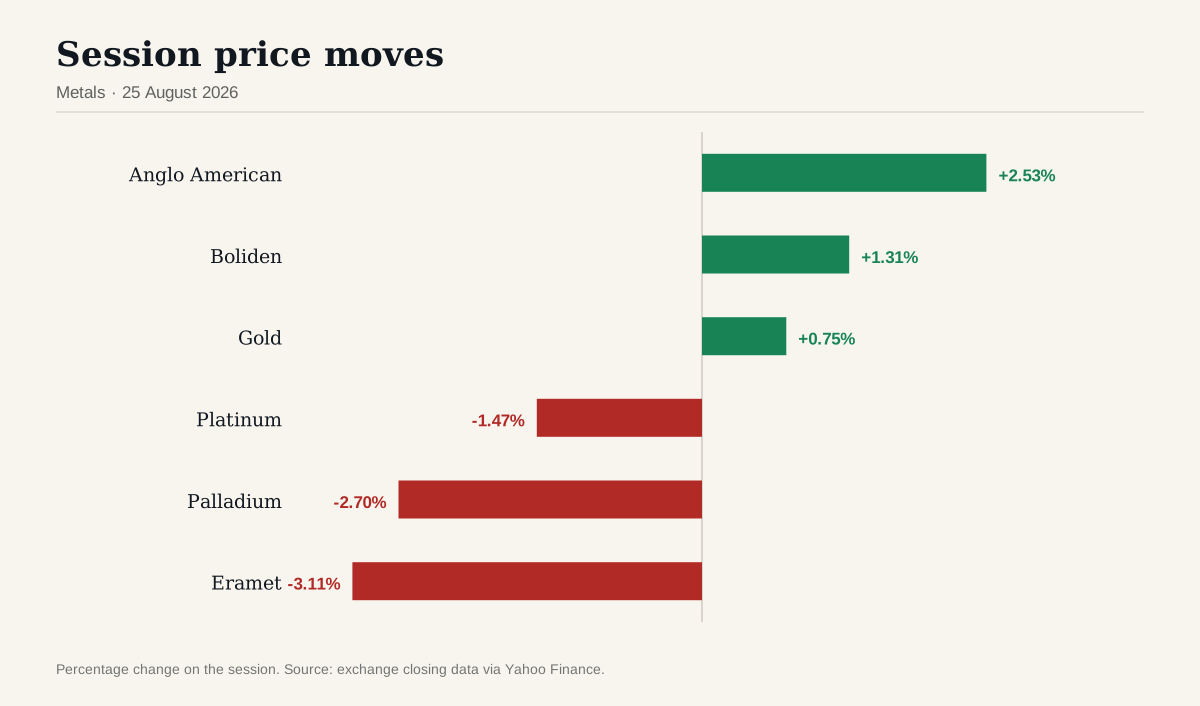
Gold futures closed at USD 4,675.70 on Tuesday, up 0.75 per cent from the previous session and marking a three‑month high. The rise came as the US dollar index slipped marginally and a series of bullish analyst notes highlighted gold's appeal amid heightened market uncertainty.
- Gold futures: USD 4,675.70, +0.75 per cent day, +14.76 per cent month
- Palladium: USD 1,325, 2.70 per cent day, +2.75 per cent month
- Platinum: USD 1,852.4, 1.47 per cent day, +14.30 per cent month
- Anglo American share price: GBp 4,170, +2.53 per cent day
- Boliden share price: SEK 573, +1.31 per cent day
Precious metal futures and European cost structures
| Instrument | Close | Day | 5-day | Volume vs avg |
|---|---|---|---|---|
| Anglo American GBp | 4,170 | +2.53% | +6.16% | 0.23x |
| Boliden SEK | 573 | +1.31% | +8.24% | 0.36x |
| Gold USD | 4,675.7 | +0.75% | +7.09% | 19.01x |
| Platinum USD | 1,852.4 | -1.47% | +7.30% | 294.84x |
| Palladium USD | 1,325 | -2.70% | +2.62% | 787.67x |
| Eramet EUR | 45.44 | -3.11% | -3.24% | 0.46x |
| Source: exchange closing data via Yahoo Finance, session of 2026-08-25. | ||||
Gold settled at USD 4,675.70, a level that sits 16.3 per cent below the 52‑week high of USD 5,586.2. Volume was 19.01 times the 20‑day average, indicating strong participation. For European firms that hold gold as a treasury asset or use it as collateral, the price uplift improves balance‑sheet flexibility and may lower financing costs where gold‑backed facilities are in place. The move also signals a risk‑off sentiment among investors, which can affect capital‑raising conditions for companies across the continent.
Palladium fell to USD 1,325, down 2.70 per cent on the day, though it remains 38.9 per cent below its 52‑week high of USD 2,169.9. The metal's 5‑day change turned positive at +2.62 per cent, while the 1‑month gain was modest at +2.75 per cent. Volume surged to 787.67 times the 20‑day average, reflecting intense trading activity. Palladium is a critical input for catalytic converters in gasoline‑engine vehicles. A price decline reduces the material cost for European auto manufacturers, potentially easing margin pressure in a sector already coping with stricter emissions standards and supply‑chain constraints.
Platinum slipped to USD 1,852.4, a 1.47 per cent drop, still 35.1 per cent under its 52‑week high of USD 2,852.4. The 5‑day trend was upward at +7.30 per cent and the 1‑month gain robust at +14.30 per cent. Trading volume reached 294.84 times the 20‑day average. Like palladium, platinum is used in catalytic converters, particularly for diesel engines and emerging fuel‑cell technologies. The price retreat eases input costs for European manufacturers that rely on platinum‑based catalysts, which could translate into modest cost savings or allow for price adjustments in a competitive market.
Both palladium and platinum have been trading well below their 52‑week peaks, a condition that may encourage European carmakers to renegotiate supply contracts or explore alternative catalyst chemistries. However, the high trading volumes suggest that market participants remain attentive to any supply‑side developments, such as mine closures or geopolitical events that could reverse the recent price softening.
European mining stocks react to metal price moves
Anglo American saw its London‑listed shares close at GBp 4,170, up 2.53 per cent from the previous close of GBp 4,067. The 5‑day gain of 6.16 per cent and 1‑month rise of 12.07 per cent indicate that investors are pricing in improving margins across the company's diversified portfolio, which includes copper, nickel, and platinum‑group metals. The stock's volume was 0.23 times the 20‑day average, suggesting that the price move was not driven by heavy trading but rather by a shift in sentiment. With the 52‑week range spanning GBp 2,185 to GBp 4,239, the current price sits 1.6 per cent below the 52‑week high, leaving limited upside unless metal prices climb further.
Boliden advanced to SEK 573, a 1.31 per cent increase from SEK 565.6. The 5‑day gain of 8.24 per cent and 1‑month surge of 19.03 per cent reflect optimism about the company's exposure to copper and zinc, both of which have been stable or modestly higher in recent weeks. Volume was 0.36 times the 20‑day average, indicating a relatively thin trade. The share price remains 21.3 per cent below the 52‑week high of SEK 727.8, implying that a sustained rally in copper could provide further upside.
Eramet fell to EUR 45.44, down 3.11 per cent from EUR 46.9. The 5‑day decline of 3.24 per cent contrasts with a 1‑month gain of 10.13 per cent, suggesting that short‑term sentiment turned negative despite a broader positive trend. Volume was 0.46 times the 20‑day average, again pointing to limited trading activity. The stock sits 48.5 per cent below its 52‑week high of EUR 88.2, a position that reflects the company's exposure to volatile nickel and manganese markets. The recent price drop may reflect concerns about the profitability of its high‑cost operations, especially if metal prices fail to sustain recent gains.
All three miners are listed on European exchanges and therefore provide European investors with direct exposure to the underlying metal price dynamics. Their share‑price moves, when taken together with the futures data, give a clearer picture of margin expectations. For example, the rise in Anglo American and Boliden shares aligns with the modest recovery in copper‑related prices, while Eramet's decline mirrors lingering uncertainty around nickel pricing.
Implications for European industrial cost and competition
The decline in palladium and platinum prices directly reduces the raw‑material bill for European automotive manufacturers that produce gasoline and diesel engines. Lower input costs can improve operating margins or be passed on to consumers in a market where vehicle pricing is highly competitive. However, the benefit is tempered by the fact that both metals are still trading well below their recent peaks, meaning that any further price weakness could erode the profitability of mining companies that supply the sector.
For firms that rely on copper, such as cable manufacturers, renewable‑energy developers, and construction companies, the modest stability in copper‑related equities (Anglo American, Boliden) suggests that input costs are unlikely to surge in the immediate term. The absence of a sharp copper price move in the data set means that European projects dependent on copper can continue to plan around existing cost assumptions.
Gold's price rise, while not an input cost for most industrial processes, influences the broader investment climate. Higher gold prices often coincide with a flight to safety, which can tighten credit conditions for European firms that depend on equity financing. Conversely, companies that hold gold reserves may see an improvement in their net‑asset positions, potentially lowering the cost of borrowing.
The US dollar index closed at 98.935, a marginal 0.07 per cent dip from the previous close of 99. The index is 2.8 per cent below its 52‑week high of 101.8. A weaker dollar typically supports higher commodity prices in dollar terms, which aligns with the observed gold rally. For European importers of metals priced in dollars, a softer dollar can reduce the euro‑denominated cost of purchases, offering a modest cushion against inflationary pressures.
Overall, the session's price action points to a short‑term easing of material cost pressures for European manufacturers, especially in the automotive sector, while mining companies continue to navigate a landscape where their share prices reflect both metal price trends and company‑specific risk factors.
Key market data points for the session
On 25 August 2026 the US dollar index settled at 98.935, the gold futures price reached USD 4,675.70, and the European metal‑producer shares moved within the ranges described above. These figures provide the reference framework for assessing cost inputs and margin expectations in the coming weeks.
Anglo American · three-month price
Chart: TradingView. Live prices may differ from the closing figures quoted above.