
copper futures rise 1.3 % as European metal producers largely gain
Copper closed at USD 6.6825, up 1.30 % on the day, while gold added 1.06 %. Thirteen of the fourteen listed metal‑related companies in the session rose, with only Acerinox slipping.
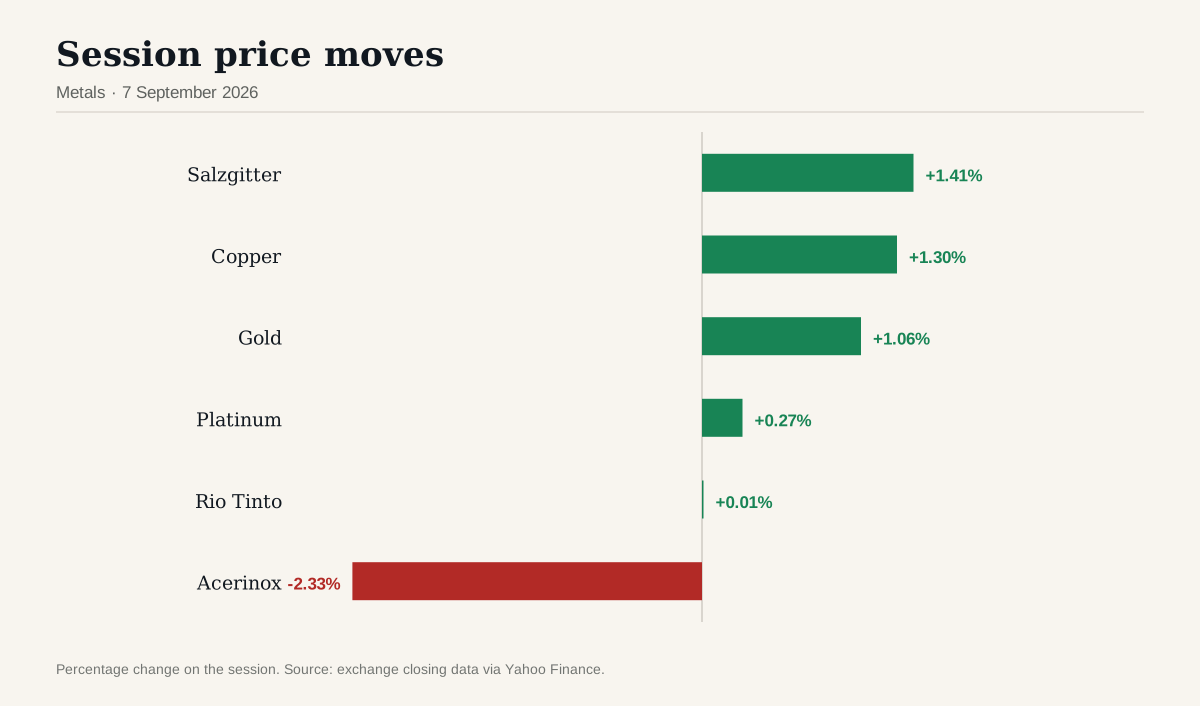
Copper futures settled at USD 6.6825 per pound, a 1.30 % increase from the previous close of USD 6.597. The move placed the contract 1.0 % below its 52‑week high of USD 6.75 and was accompanied by a trading volume 6.24 times the 20‑day average.
- Copper futures close USD 6.6825, +1.30 % on the day
- Gold futures close USD 4,476.60, +1.06 % on the day
- Salzgitter shares close EUR 61.2, +1.41 % on the day
- Acerinox shares close EUR 56.26, 2.33 % on the day
- Rio Tinto shares close GBp 7,642, +0.01 % on the day
copper price climbs amid a modestly weaker dollar
| Instrument | Close | Day | 5-day | Volume vs avg |
|---|---|---|---|---|
| Salzgitter EUR | 61.2 | +1.41% | +7.56% | 0.43x |
| Copper USD | 6.68 | +1.30% | +1.35% | 6.24x |
| Gold USD | 4,476.6 | +1.06% | +1.03% | 73.64x |
| Platinum USD | 1,826 | +0.27% | +2.10% | 98.79x |
| Rio Tinto GBp | 7,642 | +0.01% | -0.42% | 1.05x |
| Acerinox EUR | 56.26 | -2.33% | -3.37% | 0.53x |
| Source: exchange closing data via Yahoo Finance, session of 2026-09-07. | ||||
The US dollar index slipped 0.26 % to 98.905, 2.8 % below its 52‑week high. A weaker greenback tends to lift dollar‑denominated commodities, and the copper rally reflects that relationship. The price is now 1.0 % shy of the peak reached earlier in the year.
For European manufacturers that rely on copper as a primary input, cable producers, construction firms, and developers of electricity transmission infrastructure, the 1.30 % rise translates into a higher cost per tonne of finished product. Assuming a typical copper content of 5 % in medium‑voltage cable, the price increase adds roughly €30‑€40 per tonne of cable, depending on the exchange rate used for conversion. That extra cost will be absorbed either through tighter margins or by passing a portion onto end‑customers, a decision that will affect contract negotiations on new grid projects.
Because the rally is the longest sustained upward move since 1994, as reported in the market commentary, the price trajectory may influence budgeting cycles for large‑scale European energy‑transition projects that were still using 2024‑2025 copper price forecasts. Companies that locked in supply contracts at lower levels could see a relative advantage, while those still negotiating spot purchases will face a tighter cost environment.
gold gains modestly, reinforcing a safe‑haven narrative
Gold futures closed at USD 4,476.60, up 1.06 % from the previous close of USD 4,429.80. The metal sits 19.9 % below its 52‑week high of USD 5,586.20, indicating ample headroom for further movement. The rise follows a series of reports linking U.S. jobs data to expectations of further Federal Reserve rate hikes, a factor that typically supports gold demand.
While gold is not a direct input for most European industrial processes, its price movement matters for investors and corporate treasuries that hold the metal as a liquidity buffer. A higher gold price improves the balance‑sheet valuation of firms with significant bullion holdings, potentially easing financing conditions for those entities.
listed producers move with metal trends
Among the fourteen metal‑related equities tracked, thirteen posted gains. Salzgitter (SZG.DE) led the equity side with a 1.41 % rise to EUR 61.2, trading at 9.5 % below its 52‑week high of EUR 67.6. The steelmaker's share price outperformed the broader market, suggesting that investors see the recent copper rally as a sign of renewed industrial activity that could boost steel demand.
Acerinox (AMS.MC) was the sole decliner, slipping 2.33 % to EUR 56.26, 19.4 % below its 52‑week high of EUR 69.76. The fall occurred despite the broader market's upward bias, indicating that Acerinox may be contending with company‑specific issues, such as cost pressures or operational setbacks, that are not reflected in the commodity price data.
Rio Tinto (RIO.L) barely moved, edging up 0.01 % to GBp 7,642. The miner's share price is 16.2 % below its 52‑week high of GBp 9,117, and its flat performance contrasts with the copper price rise. This divergence could imply that the market does not yet attribute the copper rally to a material shift in Rio Tinto's earnings outlook, perhaps because the company's exposure to copper is balanced by other commodities.
Platinum futures added 0.27 % to close at USD 1,826, still 36.0 % below the 52‑week high of USD 2,852.40. The modest gain is unlikely to affect European automotive manufacturers in any immediate way, given the small price movement and the limited exposure of the listed companies to platinum.
implications for European industrial costs
The copper price increase directly raises input costs for sectors that depend on the metal. Cable manufacturers, which source copper on a spot or forward basis, will see higher procurement expenses. For a typical 10 km stretch of high‑voltage transmission line, the additional copper cost could add several hundred thousand euros to the total project budget.
Construction firms that use copper for plumbing, roofing, and electrical installations will also feel the pressure. The price rise may lead to a modest uptick in construction bids, especially for projects where copper makes up a noticeable share of material costs.
On the financing side, the higher copper price could affect the cost of capital for projects that rely on commodity‑linked loan covenants. Lenders often tie interest margins to commodity price benchmarks; a rising copper price could tighten those covenants, prompting borrowers to renegotiate terms or provide additional collateral.
Conversely, the gold price gain improves the balance‑sheet position of firms holding gold reserves, potentially lowering their weighted‑average cost of capital. This effect is indirect but can influence investment decisions in capital‑intensive sectors such as renewable‑energy infrastructure.
The breadth of the market, thirteen out of fourteen companies rising, suggests a generally positive sentiment among European metal producers. The only outlier, Acerinox, may be signalling a company‑specific risk that investors are pricing in, separate from the commodity backdrop.
market breadth and dollar dynamics
The US dollar index's 0.26 % decline contributed to the commodity‑friendly environment. With the index 2.8 % below its 52‑week high, the dollar's weakness is likely to keep supporting metal prices in the near term, unless macro‑economic data triggers a rapid policy shift.
Volume patterns reinforce the price moves. Copper's trading volume was more than six times the 20‑day average, indicating strong market participation. Gold's volume was even higher, at nearly 74 times the 20‑day average, reflecting heightened interest from investors tracking safe‑haven assets.
outlook and upcoming data points
The next scheduled earnings release for Salzgitter is due on 2026‑10‑15, where the company will likely comment on the impact of higher copper prices on its steel margins. Rio Tinto will publish its quarterly results on 2026‑10‑22, providing a clearer view of how the copper rally feeds into its earnings. Monitoring these dates will help gauge whether the market's current optimism translates into sustained profitability for European metal producers.
In the meantime, the copper price sits just 1.0 % below its 52‑week high, while the US dollar index remains 2.8 % under its peak. These levels set the immediate cost environment for European manufacturers that rely on copper as a core input.
Salzgitter · three-month price
Chart: TradingView. Live prices may differ from the closing figures quoted above.